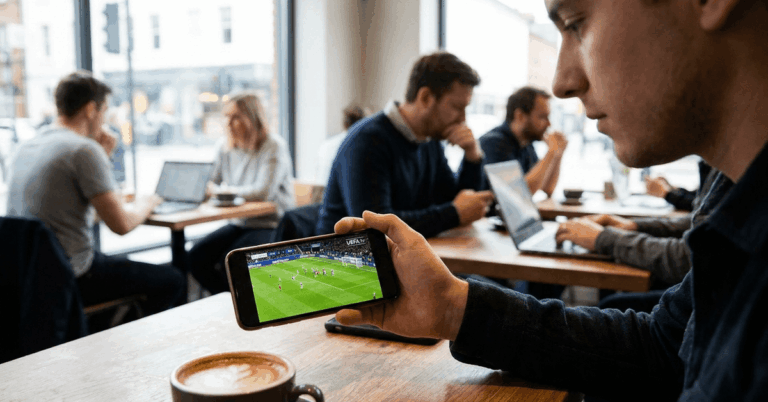
Football on your phone sounds simple until you download the wrong app. One bad choice means pop-up ads, frozen screens at the 89th minute, and a vague feeling your data just got sold.
The search for free football streaming apps that work without drama is where things get tricky. Plenty of options exist, but the gap between safe and sketchy is wide. A student sitting in a lecture hall, sneaking a Champions League group stage match under the desk, needs a different setup than someone watching La Liga at home. The app that works depends on where you live, what competitions you follow, and how much risk you’re willing to accept.



So I broke this down: which apps are worth your time in 2026, which ones to avoid, and a strategy for combining free apps that almost nobody talks about.
Which Free Football Streaming Apps Are Worth Downloading in 2026
Not every free football app does the same thing. Some carry live broadcasts. Others focus on clips, scores, and post-match replays.
A few sit somewhere in between, offering the occasional live game through licensing partnerships that change season to season.
Official Broadcaster Apps
Public broadcasters in several European countries stream select football matches at zero cost through their own apps.
ARD and ZDF cover major German matches. RTVE Play carries La Liga and Copa del Rey games for Spanish residents. France TV brings French football to screens without requiring a paid subscription.
The catch: these apps are geo-locked. RTVE Play won’t work outside Spain. ARD and ZDF only serve German IP addresses.
And the selection of matches is limited. Expect national team games and selected domestic league fixtures, not wall-to-wall coverage of every competition.
Sports Aggregator Apps Like OneFootball and FotMob
OneFootball has carved out an interesting position. The app carries free streams of select leagues and competitions depending on your location, and those deals shift regularly.
FotMob focuses more on live scores, stats, and goal clips, but both apps are safe to use and free to download.

The word “select” does a lot of heavy lifting there. On any given matchday, OneFootball might have two or three live games available in your region. On another, zero. Treat these apps as a bonus source, not your main plan.
Club and League Apps
UEFA, FIFA, and individual club channels occasionally stream preseason friendlies, lower-league matches, and extended highlights for free.
FIFA+ is FIFA’s official app, and it carries select live games, full-match replays, and on-demand content. It’s especially active during global tournaments.
Club apps tend to offer behind-the-scenes content and post-match replays. The live game selection varies based on licensing deals that are regional and temporary.
Free Football Streaming Apps Compared Side by Side
Picking the right app depends on what content matters to you. This quick comparison breaks down the five apps mentioned above across the categories that matter for a free user:
| App | Live Matches | Highlights/Replays | Region Lock | Account Required |
|---|---|---|---|---|
| RTVE Play | La Liga, Copa del Rey (select) | Yes | Spain only | No |
| ARD/ZDF | Bundesliga, national team | Yes | Germany only | No |
| France TV | Ligue 1 (select) | Yes | France only | Sometimes |
| OneFootball | Select leagues (varies) | Yes, plus goal clips | Varies by deal | No |
| FIFA+ | Select global matches | Full-match replays | Global | Free account |
The takeaway: FIFA+ is the only app on this list with global reach, and OneFootball is the most flexible aggregator, but neither replaces a dedicated broadcaster app for your home country’s league.
How to Stay Safe Streaming Football on Your Phone
Free football streams attract sketchy operators the way a derby match attracts noise complaints. The line between a legitimate free stream and a malware delivery system can be thin.
Red Flags That Should Make You Close the App
An app that asks for permissions it shouldn’t need (access to your contacts, microphone, or file storage for a sports stream) is a clear warning sign.
Apps requiring sideloading, meaning installation outside the Google Play Store or Apple App Store, carry higher risk because they bypass those stores’ security reviews.
Three signs an app is probably unsafe:
- It requires installation from a third-party website instead of an official app store
- It bombards you with pop-up ads or redirects to unfamiliar sites during playback
- It asks for personal information beyond an email address for a free account
Data Privacy on Legitimate Apps
Even trustworthy apps collect data. Push notifications, location tracking for geo-licensing, and usage analytics are standard.
The difference is that apps like OneFootball and FIFA+ publish clear privacy policies and comply with GDPR in Europe. Random APK files downloaded from a forum do not.
Check the app’s privacy policy before granting permissions. A quick scroll through the data collection section tells you whether an app tracks location passively or only when streaming, and whether it shares data with advertising partners.
The App Stacking Strategy Nobody Mentions
Every article about free football streaming lists apps. Almost none explain how to combine them.
I would put this bluntly: no single free app covers everything. The fans who get the best free coverage in 2026 are running two or three apps simultaneously. A national broadcaster app handles domestic league matches.
OneFootball or FIFA+ fills in with whatever international games their licensing covers that week. And a replay app like UEFA.tv catches anything that fell through the cracks.
This stacking approach takes about ten minutes to set up, and it solves the biggest frustration with free streaming: the feeling that something is always unavailable.
Why I Think Chasing Live Streams Is Overrated
This is where I’ll go against the grain. The common advice is that live is always better. I disagree, at least when it comes to free streaming on a phone.
Watching a full 90-minute match on a 6-inch screen, often on mobile data, frequently interrupted by buffering, is a worse experience than watching the full-match replay on FIFA+ an hour after the final whistle.
The replay loads faster, has no buffering, and you can skip halftime.
I’d take a clean, buffer-free replay on FIFA+ over a stuttering live stream on a questionable app every single time. The anxiety of “will the stream hold?” during a penalty shootout is worse than waiting 60 minutes for a clean replay.
For fans who need live scores during the match, FotMob sends goal notifications within seconds. The combination of real-time score alerts plus a post-match full replay gives you 90% of the experience with none of the technical headaches.
Setting Up Your Phone for Football Streaming
Getting started takes less effort than most people expect:
- Download apps only from the official App Store or Google Play. Search for the exact app name and check the developer.
- Test each app on a non-match day. Open a replay or highlight clip to confirm the app loads and streams properly on your connection.
- Turn on match notifications selectively. Apps like OneFootball let you follow specific teams, so you only get alerts for games that interest you.
- Adjust streaming quality to match your data plan. Lower resolution saves data without ruining the viewing experience on a phone screen.
A stable Wi-Fi connection makes the biggest difference for live streaming quality. Mobile data works for highlights and replays, but live matches on 4G can stutter depending on network congestion in your area.
Alternatives When a Match Isn’t Available Live
Blackout restrictions and licensing gaps mean some matches simply aren’t available for free in certain countries. Extended highlights and full replays go up on YouTube, UEFA.tv, and club apps within minutes of the final whistle in many cases.
I’d rank this as a strength, not a compromise. Extended highlights on official channels run 10 to 15 minutes and cover every meaningful moment of a match.
For midweek group stage games or early-round domestic cup ties, a well-edited highlight package tells the full story in a fraction of the time.
Questions People Ask About Free Football Streaming Apps
Q: Are free football streaming apps legal? Apps from official broadcasters like RTVE Play, ARD, and France TV are completely legal. FIFA+ and OneFootball also operate through licensed agreements. The apps to avoid are unlicensed third-party APKs distributed outside official app stores.
Q: Can I watch the Champions League for free on my phone? It depends on your country. Some national broadcasters carry select Champions League matches. FIFA+ does not cover Champions League. UEFA.tv sometimes posts full-match replays after the live broadcast window closes, so check there if your region has no free live option.
Q: Do free streaming apps work outside Europe? FIFA+ works globally and carries select matches from various competitions worldwide. OneFootball’s free stream availability changes by region. National broadcaster apps like RTVE Play and ARD are locked to their home countries and won’t work abroad without a VPN, which may violate terms of service.
Q: What internet speed do I need for streaming football on my phone? A stable connection of at least 5 Mbps handles standard definition streaming on most apps. For higher quality, 10 Mbps or above reduces buffering. Wi-Fi is more reliable than mobile data for full match streams, especially in crowded areas where network congestion spikes during popular games.
Q: Is FIFA+ completely free? FIFA+ offers a free tier that includes select live matches, full-match replays, documentaries, and historical game archives. No credit card is required. Some premium content may sit behind a paid tier, but the free selection is large enough to be useful on its own.
Conclusion
The best free football streaming setup in 2026 isn’t about finding one perfect app. Stack two or three apps based on your region and the competitions you follow.
Test them before match day, keep your downloads inside official app stores, and treat replays as a feature rather than a fallback. That combination gives football fans on a budget a reliable way to follow the sport they love all season long.