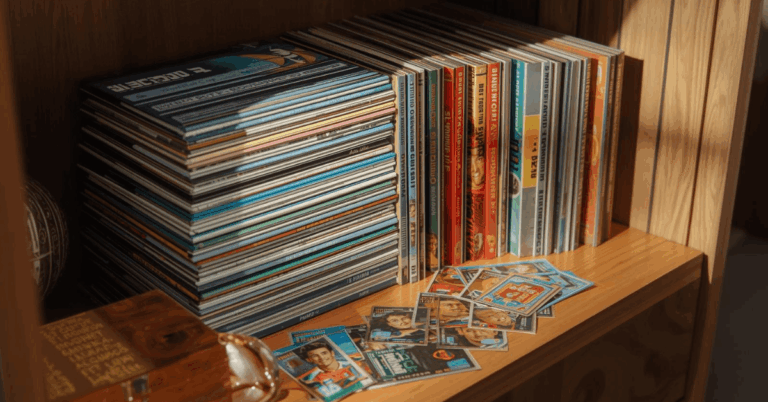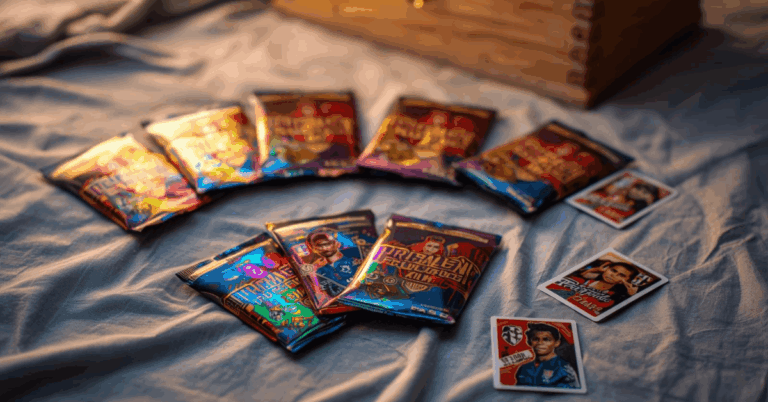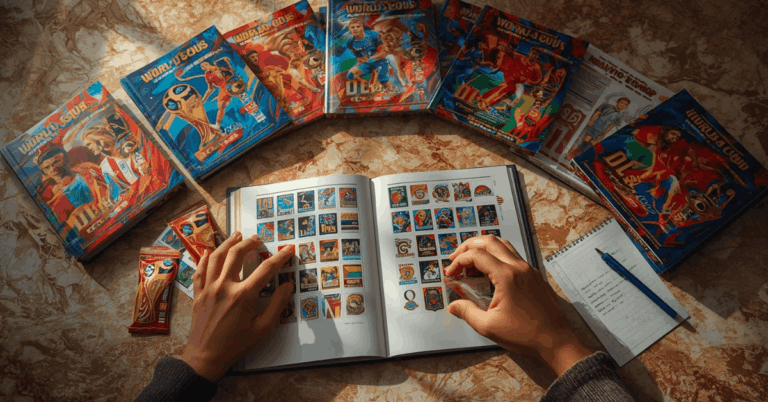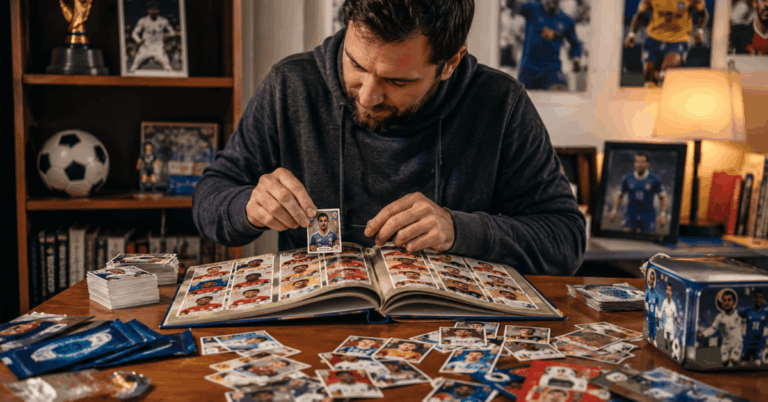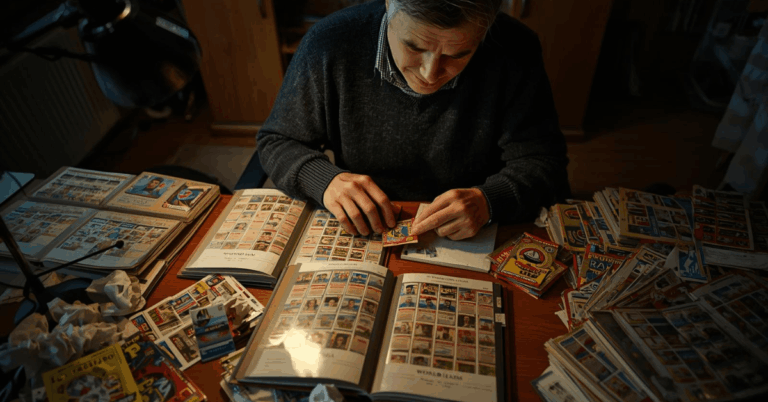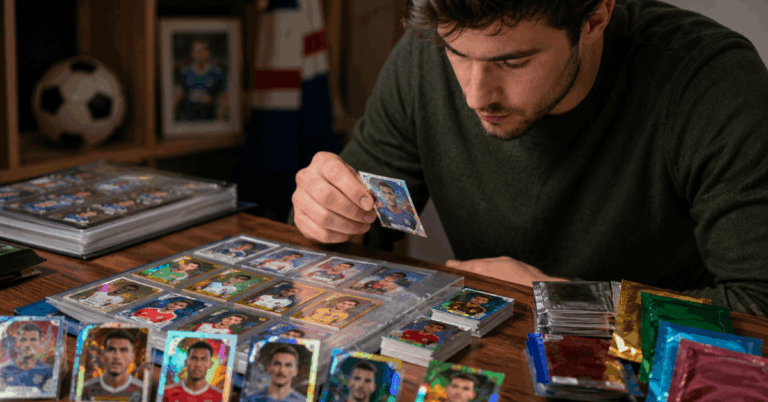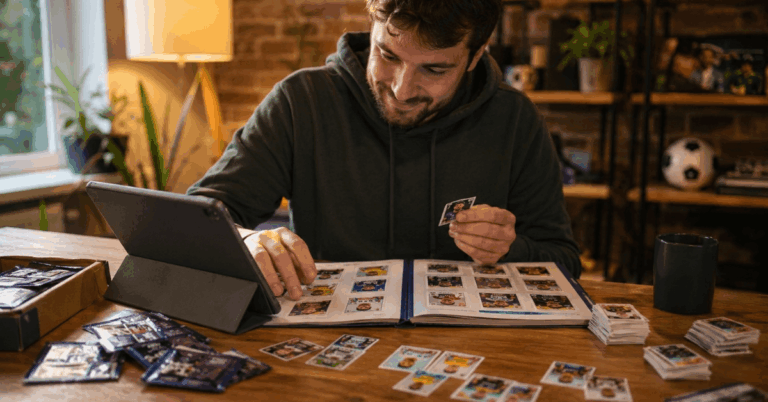
A nearly-complete album is one of the most dangerous objects in a collector’s home. Those last eight missing stickers have cost collectors far more than a full box would have cost.
The World Cup sticker market rewards patience and punishes impulse. Prices spike before tournaments, drop after them, and rare items attract both genuine treasure and convincing fakes.


This is for the collector who wants to build a World Cup sticker collection without overpaying. Smart timing and the right platforms will save you real money.
World Cup sticker packs are more fun when you stop chasing completion and start enjoying the search.
Why World Cup Sticker Value Works Differently Than You Expect
Panini has dominated the World Cup sticker market since 1970, and the demand cycle never fully stops between tournaments.
Albums from Mexico ’86 now trade for serious money. Stickers from tournaments before 1990 are hard to find in good condition at almost any price.
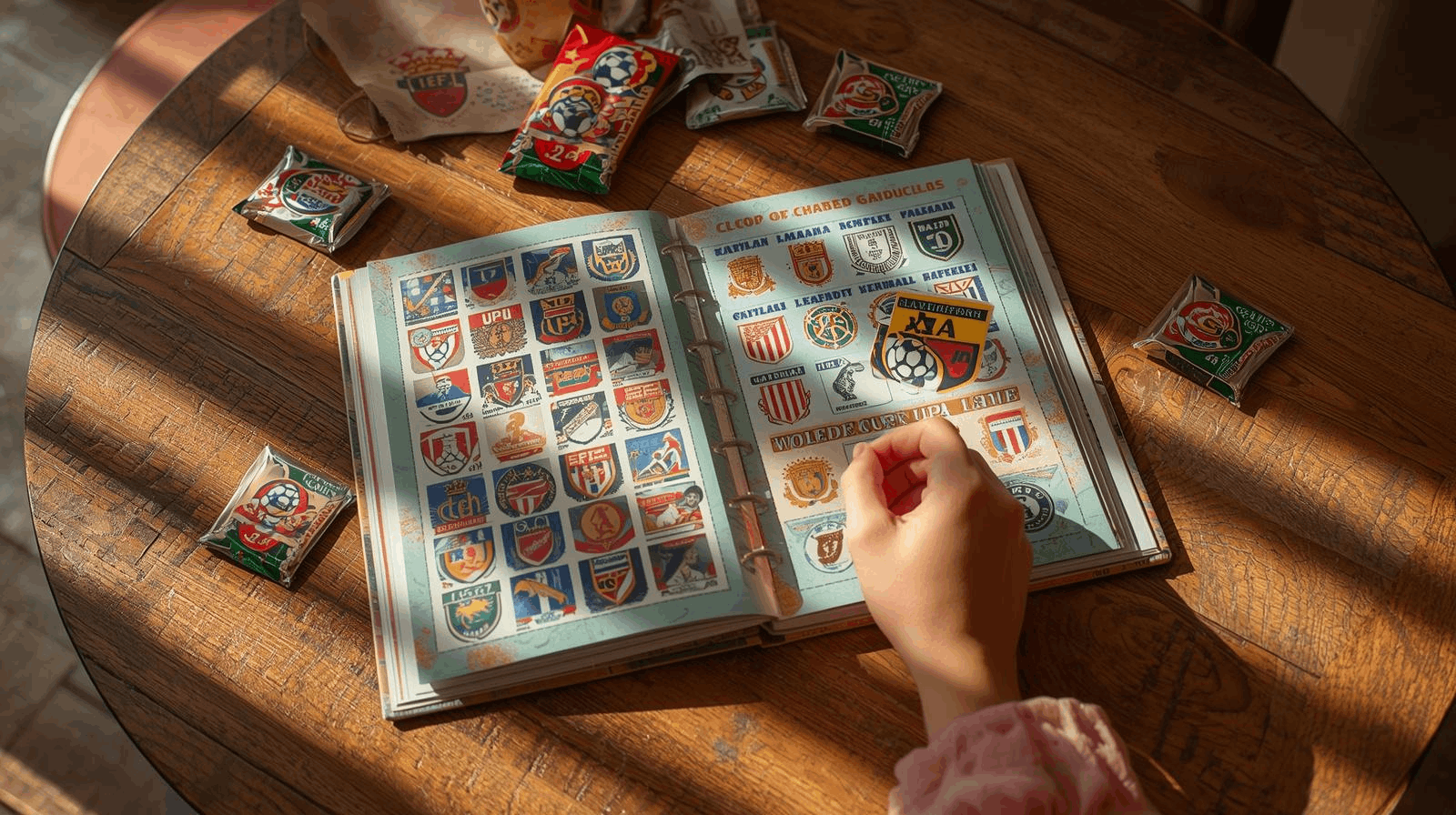
Three things drive sticker value: the player on the sticker, the edition’s scarcity, and the condition of the item.
A low-resolution scan of a 1982 Zico sticker tells you nothing about whether the physical copy is worth $5 or $500. Condition and provenance matter more than age alone.
The Nostalgia Premium Has Real Limits
Nostalgia adds a floor to sticker prices, not a ceiling. Collectors pay more for items tied to specific tournament memories, but that premium only holds for players people actually remember.
A sticker from a forgotten squad member in a forgettable group-stage exit will not attract bids regardless of the pack’s age. Player recognition is the filter that matters most when evaluating older stickers for purchase or resale.
Regional Editions and Why They’re Worth Tracking Down
Panini produces region-specific editions for many tournaments, and these receive almost no mainstream coverage. Dedicated collectors hunt them because prices can differ from the standard international release.
For collectors who specialize in a particular country’s football history, regional editions are legitimate finds worth tracking through online forums and collector groups.
When to Buy World Cup Sticker Packs (The Standard Advice Gets This Wrong)
The advice that circulates most widely says to buy early, stock up before the tournament, and get ahead of rising prices.
That approach makes sense if you want the experience of opening packs while matches are live. As a budget strategy, it is one of the more expensive routes a new collector can take.
Sticker prices drop noticeably after a World Cup ends. Retailers who over-ordered discount quickly. Online sellers follow the same pattern when a new edition fails to sell out completely.
The post-tournament window consistently offers lower prices than the pre-tournament rush, and the albums are still just as complete.
Post-Tournament Clearance Is an Underused Strategy
Local stores slash sticker pack prices in the weeks after the final whistle. Physical shops have no reason to keep year-old inventory at full price. Online platforms see the same shift as sellers move excess stock.
For collectors who are not chasing the social experience of filling pages alongside live matches, the post-tournament period is the right time to start buying.
Group Buying Cuts Your Per-Pack Cost Sharply
Joint purchases with friends or an organized trading group reduce the per-pack cost and create a built-in swap network.
A full box split among four collectors spreads the upfront spend and means duplicates can be traded immediately rather than piling up in a drawer. Group buying also makes it easier to target specific players or teams once the initial box is opened.
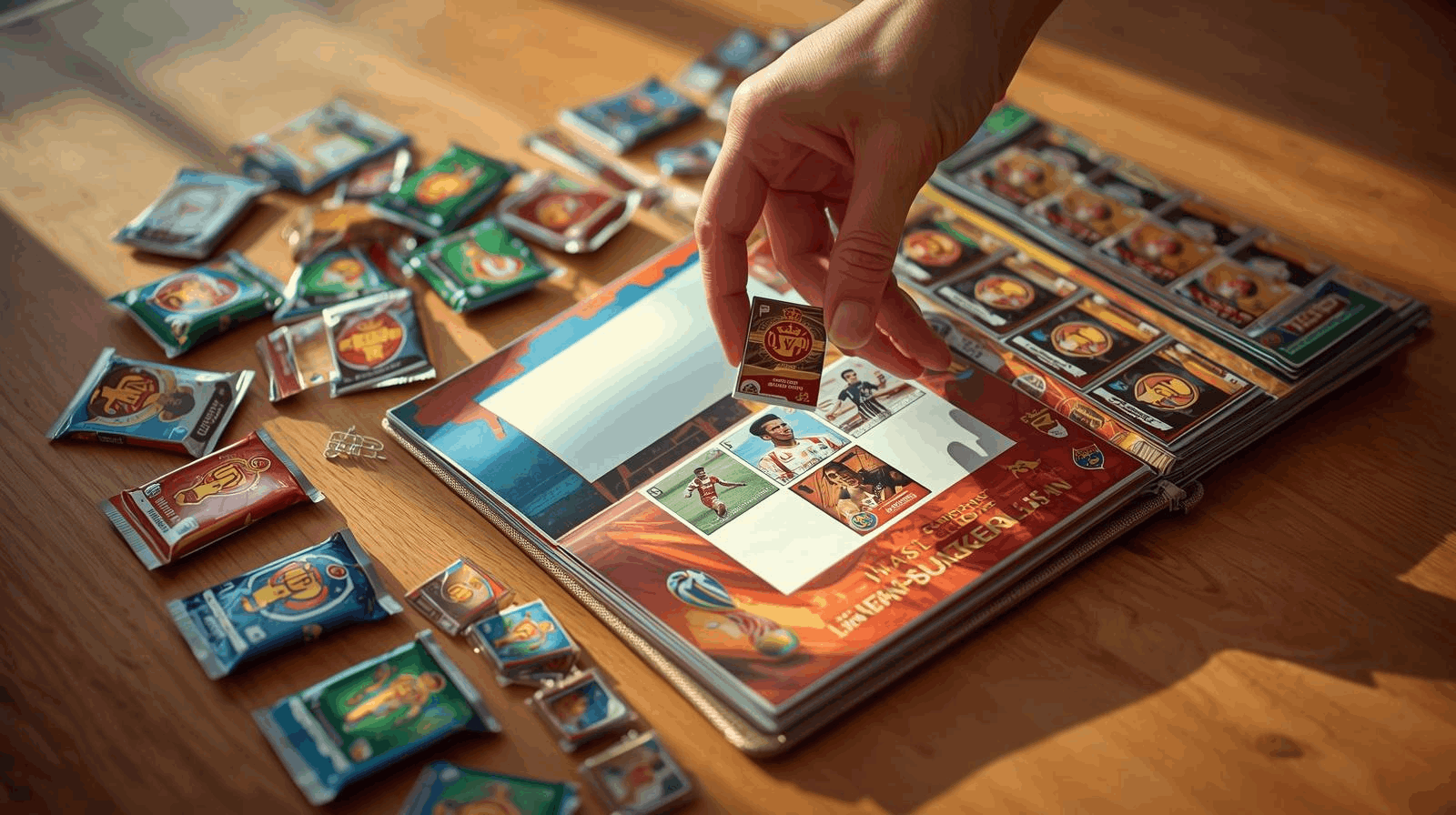
Where to Actually Buy World Cup Sticker Packs Without Getting Burned
The Panini official shop is the safest starting point for new releases, pre-orders, and restocks of older editions.
Third-party sellers on Amazon and eBay carry past editions at varying prices, but edition year and condition need careful checking before committing.
Local stores and pop-up hobby stalls occasionally run clearance deals after tournaments. These are uneven but sometimes offer prices well below what you would pay online.
Reading Seller Listings Properly
Item descriptions matter more than the listed price when buying older sticker packs. Watch for:
- Edition year and regional variant: Some listings show the right album cover but sell the wrong edition
- Pack condition: Sealed versus opened packs are different products at very different price points
- Seller feedback: Check ratings and read comments from recent buyers before committing
- Photos over stock images: Listings with actual product photos carry less ambiguity than those using manufacturer images
Skipping this step is how collectors end up with the wrong item at the wrong price.
Online Trading for That One Missing Sticker
Panini runs an official trading portal that connects collectors for sticker swaps. For a single elusive sticker needed to complete a set, this is a safer option than buying from a random seller on a public marketplace.
The r/panini community on Reddit also runs active swap threads with a collector base that has built up real trust over time.
For higher-value items, using a platform with buyer protection is non-negotiable. Personal sales without a secure payment system or dispute process introduce risk that no marginal price saving justifies.
Albums, Tins, and Everything Beyond the Stickers Themselves
The album is the anchor of any World Cup sticker collection. Stickers without an album are just loose paper.
The album gives the collection structure and makes the gaps visible, which is precisely what drives the urge to keep opening packs. What kind of album you choose matters more than most guides admit.
Standard Softcover vs. Hardcover Editions: Which One Actually Makes Sense
Softcover albums are cheap and widely available. They are the right choice for most collectors, especially those just starting out. Hardcover and limited-edition versions cost more but hold up better over time and sometimes include exclusive inserts.
For display purposes, the hardcover version makes a better case. For a first-time collector filling pages for the first time, the standard album is the practical call.
| Album Type | Cost | Durability | Best Fit |
|---|---|---|---|
| Standard softcover | Low | Moderate | Beginners, casual collectors |
| Hardcover / Limited edition | Higher | High | Display, gifts, serious collectors |
| Digital album (Panini Digital Collection) | Low-moderate | N/A | Fans with limited physical storage |
My take on the Panini Digital Collection: the resale value is lower than physical albums, but as an entry point for new collectors who want the experience without a physical storage commitment, it is more useful than most reviews give it credit for.
Specialty Tins and the Error Sticker Market
Metal tins and collector’s boxes with exclusive stickers or artwork cost more than standard packs, but the presentation makes them worth considering as gifts or display pieces.
Error stickers and autographed stickers are a separate category that demands serious research.
Authenticity and provenance matter far more here than the asking price. Check recent auction data and compare against verified examples before paying a premium on anything described as rare or limited.
The Mistakes That Actually Burn Collectors
A few patterns repeat across collector communities, and most share the same cause: spending money before doing basic research. Sound familiar?
The traps worth avoiding:
- Paying for “rare” without verification: A sticker marketed as rare needs documentation. Compare recent sold listings on auction platforms before paying above standard market prices.
- Ignoring total cost on international orders: Shipping, currency conversion fees, and customs duties on larger shipments can turn a cheap deal into an overpriced one. Calculate the full delivered cost before committing.
- Opening packs without a swap network in place: Duplicates pile up fast without people to trade with. Joining an online group before you start buying prevents boxes of doubles from becoming a storage headache.
- Chasing set completion at peak prices: Paying premium prices for the final missing stickers almost always costs more than buying a second box and trading out. Run the numbers first.
The Community Side That Keeps Sticker Collecting Going Between Tournaments
Swap meets during World Cup years, Facebook groups, and Reddit’s r/panini community are active spaces for trading stickers.
Online groups stay active between tournaments, which matters when you are chasing older sets or tracking down regional editions.
Physical meetups depend on local turnout, but online communities run year-round and span every collecting era from 1970 onward.
Some cities organize swap events tied to major football tournaments. These create a relaxed environment for in-person trading and are worth attending if one runs near you.
The variety depends on who shows up, but experienced collectors often bring material from multiple decades.
Questions People Ask About World Cup Sticker Collecting
Q: When is the cheapest time to buy World Cup sticker packs? The weeks after a tournament ends are typically the lowest-price window. Retailers clear out stock, and online sellers discount to move inventory. Pre-tournament buying is for the experience of collecting live, not for budget efficiency.
Q: Are digital Panini sticker albums worth collecting? They work well for fans who want the collection experience without physical storage demands. Resale value is lower than physical albums, but if you are collecting for enjoyment rather than investment, digital albums are a practical and underrated option.
Q: How do I verify that a rare sticker is legitimate? Check recent sold listings on major auction platforms to see what similar items actually traded for. For autographed or error stickers, ask for provenance documentation and compare images against verified examples before paying a premium.
Q: Can you make real money reselling World Cup stickers? Occasional reselling of duplicates carries minimal obligations for most collectors. Operating as a regular reseller at scale typically involves business registration and income reporting. Check your local tax authority’s guidelines if you plan to sell frequently.
Q: What makes regional Panini editions different from standard ones? Regional editions are produced for specific markets and can contain different player selections, cover designs, or insert cards. They receive less coverage than standard editions but trade actively among collectors who specialize in specific countries or competitions.
Conclusion
Completing a full World Cup sticker album is one of the most satisfying things a football fan can do. The collecting market is active and accessible in 2026, with options across every budget and format.
Smart timing and a solid swap network will take you further than opening packs alone ever could. Start with the official Panini shop, find a trading group, and let the album fill in over time.