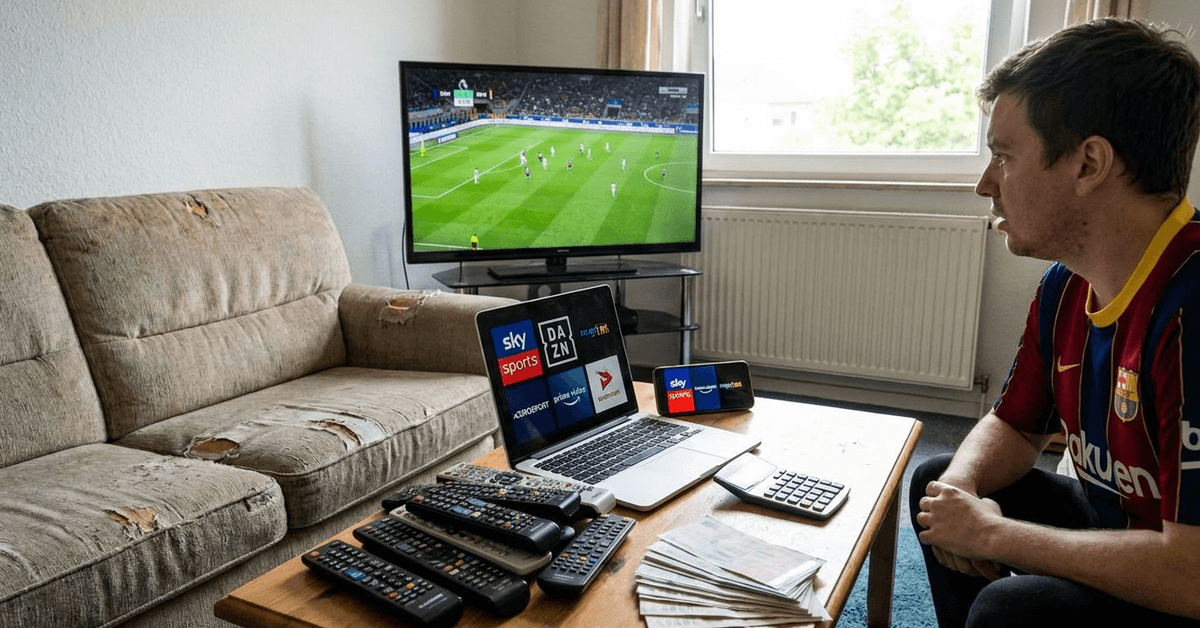
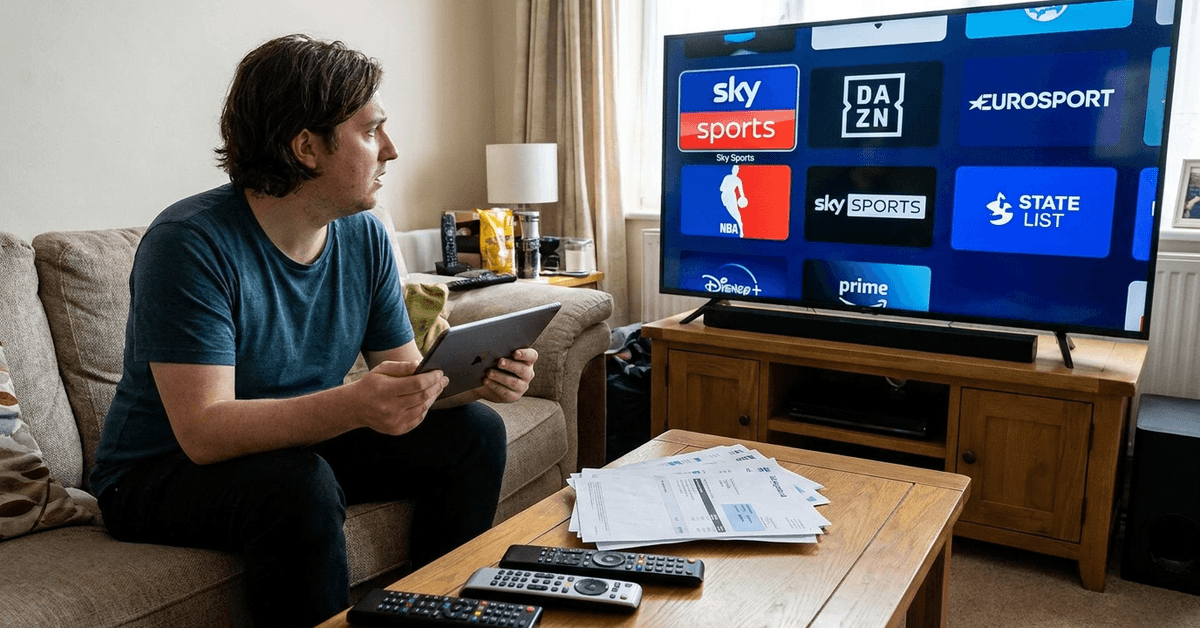
Paying for Sky Sports, DAZN, and a third service just to follow one team across two competitions feels absurd. And yet, that is the reality for millions of European football fans right now.
Football streaming on a budget requires a different mindset than cutting costs on Netflix or Spotify. The good news: there are real strategies that cut your annual streaming bill without pushing you toward shady pirate sites. Some of these tricks work immediately.



This guide is built for the fan who watches 2 to 4 matches per week and currently pays for at least two football streaming services across Europe.
Why Football Streaming Keeps Getting More Expensive
Rights Deals Are Split Across Too Many Providers
The root of the problem is broadcasting rights fragmentation. One provider holds Premier League rights in your country. Another owns Champions League coverage. A third might control domestic league matches.
Each provider paid enormous sums for those rights, and they pass the cost to you. So following a single club through both league and European competition can mean subscribing to two or three separate platforms.
That is a structural problem, and no single streaming service is working to fix it.
Upsell Features That Quietly Inflate Your Bill
HD access, 4K streaming, multi-device support, and DVR replays are increasingly sold as add-ons rather than defaults.
What looks like a €9.99/month subscription can creep toward €15 or €18 once you add the features that make watching football on a phone or smart TV tolerable.
I would check DAZN’s pricing tiers closely for this, because their base package in several European markets strips out simultaneous streaming and 4K, two features that used to be included at launch.
The smaller charges are the ones that go unnoticed. And over a 10-month football season, even €3/month in extras adds up to €30 you did not budget for.
Subscription Overload Is a Real Spending Problem
Football streaming sits on top of entertainment subscriptions you already carry.
Add a music service, a general streaming platform, maybe a news app, and the combined monthly cost can cross €60 to €80 without any single service feeling expensive on its own.
This is the trap. Each subscription seems reasonable in isolation. The damage only becomes visible when you check your bank statement and add them all together.
The Seasonal Subscription Strategy That Saves Real Money
Rotate Subscriptions Around the Football Calendar
The single best budget move is treating streaming subscriptions as seasonal, not annual.
The European football season runs roughly from August through May. That leaves June and July as months where cancelling every football service costs you nothing.
But the smarter version goes deeper. Champions League group stages run from September to December, with knockouts from February to May.
A fan who only cares about Champions League could subscribe for those specific windows and cancel during the gaps.
I think the “subscribe and forget” habit costs the average European football fan at least 2 to 3 months of wasted payments per year. That is money spent on a service sitting idle while no football is being played.
When Pay-Per-View Beats a Monthly Plan
Some platforms sell individual matches for a one-time fee. This model sounds expensive per game, but the math flips for fans who only watch a handful of matches each month.
A fan watching one or two games per month would pay less through pay-per-view pricing than through a €15/month subscription. The break-even point is usually around three to four matches. Below that number, buying single games is cheaper.
The catch: pay-per-view is not available on every platform or for every league. But where it exists, it is worth checking whether your viewing habits make it the better deal.
Comparing Football Streaming Services in Europe
The major platforms differ on price, league coverage, and contract terms. A quick comparison helps decide which one (singular, not all three) fits your situation:
| Feature | Sky Sports | DAZN | Eurosport |
|---|---|---|---|
| Primary Leagues | Premier League, EFL | Champions League, Serie A, Ligue 1 | Selected domestic leagues, tennis |
| Monthly Cost Range | €20 to €35 | €10 to €20 | €7 to €12 |
| Contract Required | Often 12 months | Monthly option available | Monthly option available |
| Pay-Per-View | Limited | Some markets | Rare |
The takeaway: DAZN’s no-contract monthly option gives the most flexibility for fans who want to rotate subscriptions seasonally, while Sky Sports locks you into longer commitments that make cancelling harder.
League-Specific Platforms Worth Checking
Some leagues and clubs run their own streaming services with live match access at lower prices than the big platforms.
These can be a smart fit if your interest is narrow. A fan who only follows La Liga or Bundesliga domestically might find a league-specific app cheaper than a general sports package.
The limitation is obvious: cross-league coverage is nonexistent. Following a team in both the Premier League and Champions League still requires multiple services.
Free and Legal Ways to Watch Football in 2026
Official Highlights on YouTube and League Apps
Every major European league releases free match highlights within hours of the final whistle. The Premier League, Bundesliga, and La Liga all publish clips on YouTube and their official apps.
These highlight packages run 5 to 10 minutes per match and cover every goal, red card, and major chance. Fans who cannot watch live will find these cover the emotional beats of a match surprisingly well. They cost nothing and are fully legal.
Official league highlight channels on YouTube are the fastest way to stay current without paying for a subscription.
Public Broadcasters Still Air Live Football
This is the one budget tip almost every article on this topic glosses over.
Public broadcasters in Germany (ZDF, ARD), the UK (BBC, ITV), France (France Télévisions), and other European countries still air selected live matches, especially during international tournaments like the Euros and the World Cup.
Even during the regular season, some domestic cup matches and national team qualifiers appear on free-to-air channels.
Check your national broadcaster’s sports schedule each week. The coverage changes by season, and these schedules are posted on their websites.
Staying Safe While Cutting Streaming Costs
Red Flags That Signal an Unsafe Stream
The temptation to watch a match through an unverified free link is strong when legitimate options cost money.
But unsafe streams carry real risks: malware, data harvesting, phishing ads, and copyright violations that could bring legal trouble in some EU jurisdictions.
Warning signs to walk away from immediately:
- The site asks you to install a browser extension or download a media player
- Payment is requested through cryptocurrency or wire transfer outside standard processors
- Pop-up ads appear faster than you can close them, especially ads mimicking system warnings
- The stream URL changes constantly and gets shared through anonymous social media accounts
Sticking with DAZN’s official platform or your national broadcaster eliminates these risks entirely.
Check Cancellation Policies Before Signing Up
One budget mistake fans make repeatedly: subscribing to a platform without reading the cancellation terms. Some services let you pause or cancel month-to-month. Others lock you into 6 or 12 month contracts with early termination fees.
Reading the cancellation policy takes two minutes and can save months of payments on a service you no longer want.
Alternatives That Do Not Require a Screen
Live football does not always need a streaming subscription. Community watch parties at local pubs or sports bars split the cost socially while adding atmosphere that a solo couch session cannot replicate.
Podcasts and local radio stations also provide live match commentary, often with analysis that streams do not include. These are free and work well for fans commuting during match times.
I would argue that the common advice to “share a subscription with friends or family” is getting riskier in 2026. DAZN and other platforms have introduced device verification and IP-based restrictions that can lock shared accounts without warning.
A subscription meant for four people becomes useless when the platform flags the arrangement. Rotating your own single subscription seasonally is a more reliable long-term strategy than depending on account sharing.
Questions People Ask About Football Streaming on a Budget
Q: Can I watch Champions League matches for free in 2026? Selected matches may air on public broadcasters during major rounds, depending on your country. ZDF in Germany and ITV in the UK have carried knockout-stage games in recent seasons. Check your national broadcaster’s schedule before each matchday.
Q: Is DAZN cheaper than Sky Sports for football? DAZN’s base monthly cost tends to be lower, and their no-contract option lets you cancel anytime. Sky Sports covers the Premier League more completely, but often requires a longer commitment that increases total cost over a season.
Q: Are free football streaming sites safe to use? Unverified free streams carry high risks of malware and data theft. Sites that demand browser extensions or unusual payment methods are almost always unsafe. Stick with official league channels and licensed broadcasters.
Q: How many football streaming services does the average fan need? That depends on which leagues and competitions matter to you. A fan following one domestic league might need only one service. Fans tracking a club across league and European play often need two, which is why seasonal rotation saves money.
Q: Does pay-per-view work out cheaper for casual football fans? For fans watching fewer than three or four matches per month, pay-per-view pricing often beats a monthly subscription. The math shifts once viewing frequency goes above that threshold.
Conclusion
The smartest football streaming budget starts with one honest question: how many matches do you watch per month? That number, not brand loyalty or habit, should decide which service and pricing model fits your season.
Treat every subscription as temporary, and cancel the moment the football calendar goes quiet. The fans who save the most are the ones willing to press the cancel button.