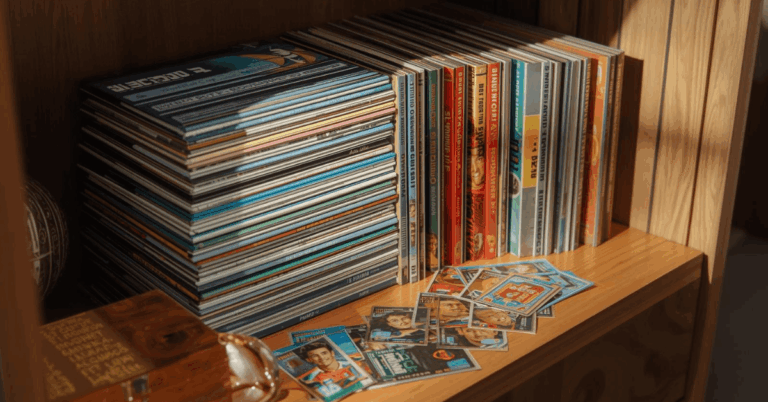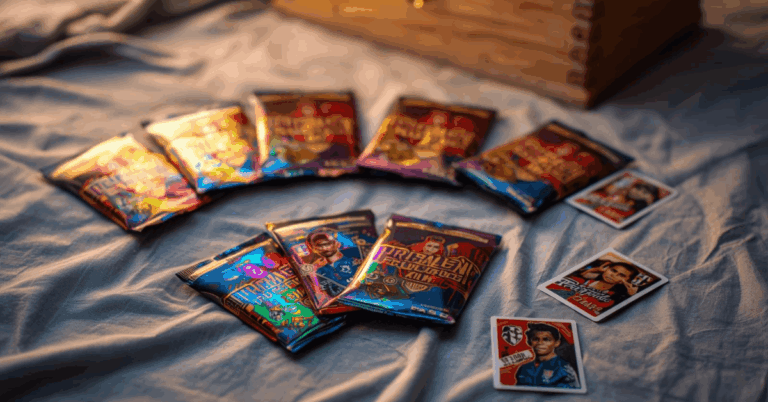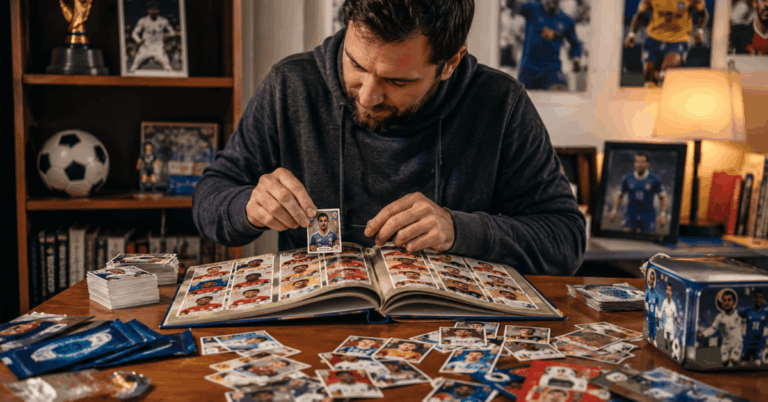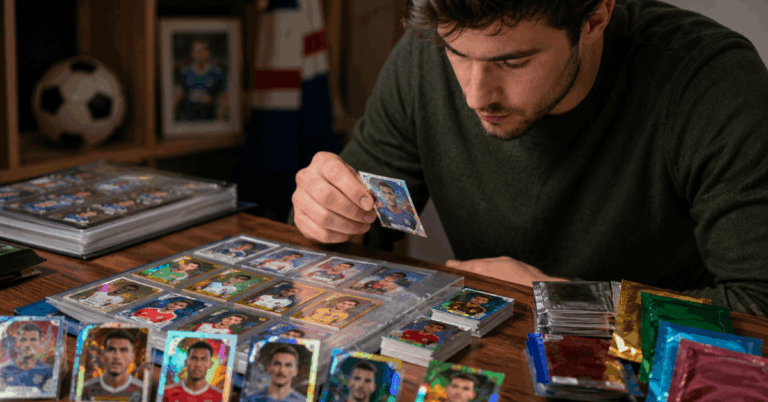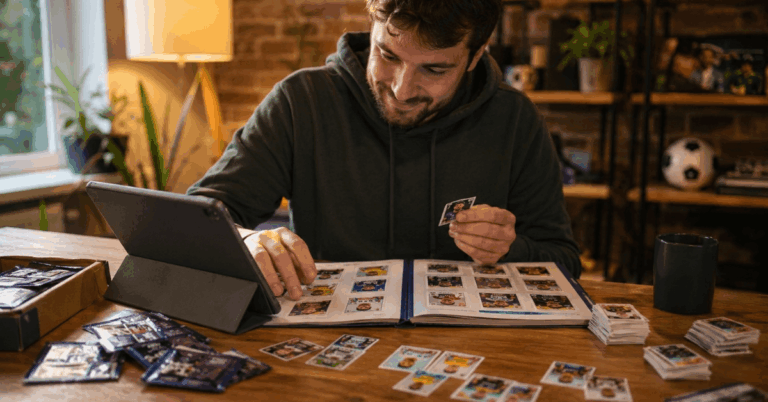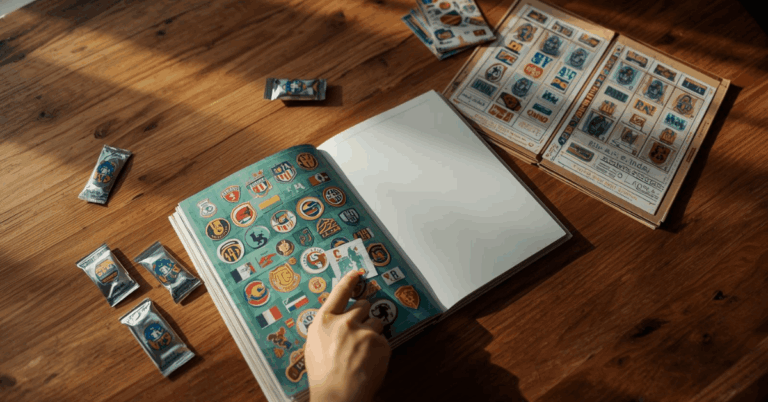
That feeling when you tear open a fresh sticker pack and the player you’ve needed for two weeks is right there on top. Part relief, part triumph, part “finally.” It is weirdly satisfying.
Football sticker collecting has been around since the 1970s, but 2026 feels like a full-scale revival. Tournament albums are back, swap groups are loud, and Panini shelves clear out in days during tournament cycles.


If you are a parent watching your kid obsess over an album, or someone who just bought their first pack in twenty years and felt oddly alive about it, this piece is for you.
My take on the hobby has shifted over time: sticker collecting gets dismissed as children’s entertainment, but the swap mechanics, the hunt for rare cards, and the community element make it as engaging for adults as any other collector activity.
Why Football Sticker Albums Are Addictive By Design
The Psychology Behind Every Pack Opening
There is a reason pack openings get filmed and posted online. The suspense of a sealed pack is the same mechanic that drives trading card games and blind box toys. Five to seven stickers per pack.
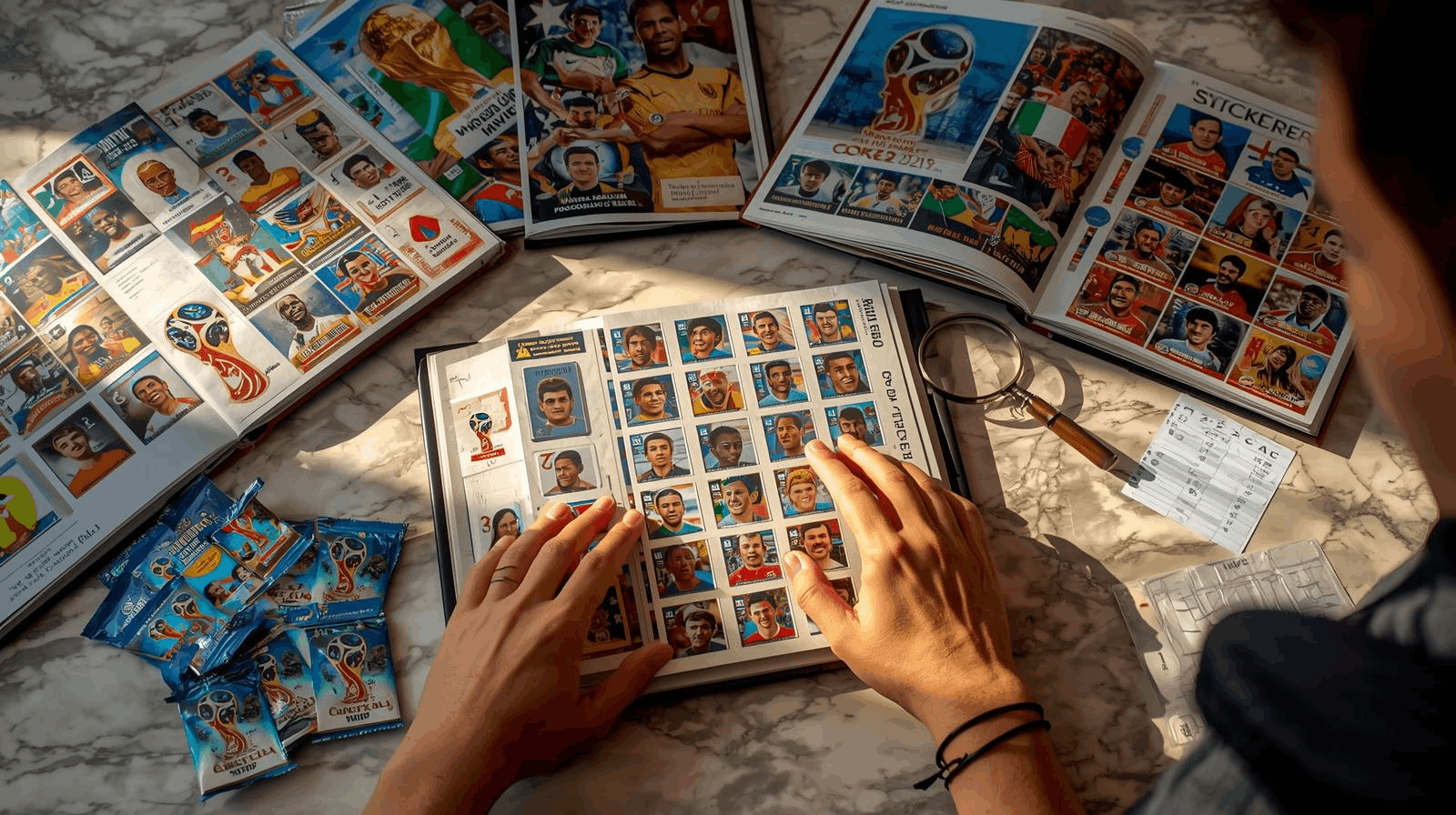
The odds of pulling any specific sticker are low enough to keep you buying, high enough to feel achievable. That gap is where the pull lives.
The ritual matters just as much as the odds. Serious collectors open packs at a fixed time, weekly or daily during tournament season.
It stops being a purchase and becomes a routine. That shift from transaction to habit is exactly how the hobby keeps people for years.
Swapping Is the Social Layer That Makes Collecting Stick
Sticker albums would be a fairly solitary activity without swap culture. Trading duplicates with friends, neighbors, or strangers in online groups is where real engagement happens.
Swap groups on Facebook and dedicated collector forums are active year-round, peaking hard during World Cup cycles.
The social layer keeps people in the hobby long after the initial excitement of a new album fades. A collector who swaps is a collector who stays.
I find the swap dynamic more interesting than the buying side. Knowing which stickers are liquid, which ones rarely show up in trades, and who is looking for what turns a casual hobby into a small strategic game.
Panini Dominates But It Is Not Your Only Option
Panini is the name that comes up first in any conversation about football sticker albums. Their official World Cup albums have been releasing since 1970, and the brand holds licensing deals covering nearly every major international tournament.
A lot of casual collectors do not know that Panini also produces club-level albums, women’s tournament editions, and regional releases.
The variety is wider than the brand’s mainstream reputation suggests. And then there are the other players in the market.
How Panini, Topps, and Regional Brands Actually Compare
Regional publishers exist across several markets. Some countries run local brands tied to national leagues or specific cup competitions.
These smaller print runs attract serious collectors because the swap opportunities are rarer and the challenge of completion is steeper.
| Brand | Coverage | Rarity Factor | Best For |
|---|---|---|---|
| Panini | Global, major tournaments | Low to medium | Casual and first-time collectors |
| Topps | European leagues, Champions League | Medium | Club and league fans |
| Regional publishers | National leagues, local cups | High | Completionists wanting a real challenge |
Panini wins on availability and community size. Topps wins on specific European league depth. Regional brands win for collectors who want something that is genuinely hard to find and harder to swap.
The Cost Math Nobody Calculates Before They Start
I disagree with the widespread advice to just keep buying packs until your album is complete. Swapping is described in every collector guide as essential, but most people treat it as optional. That framing is exactly what makes albums expensive.
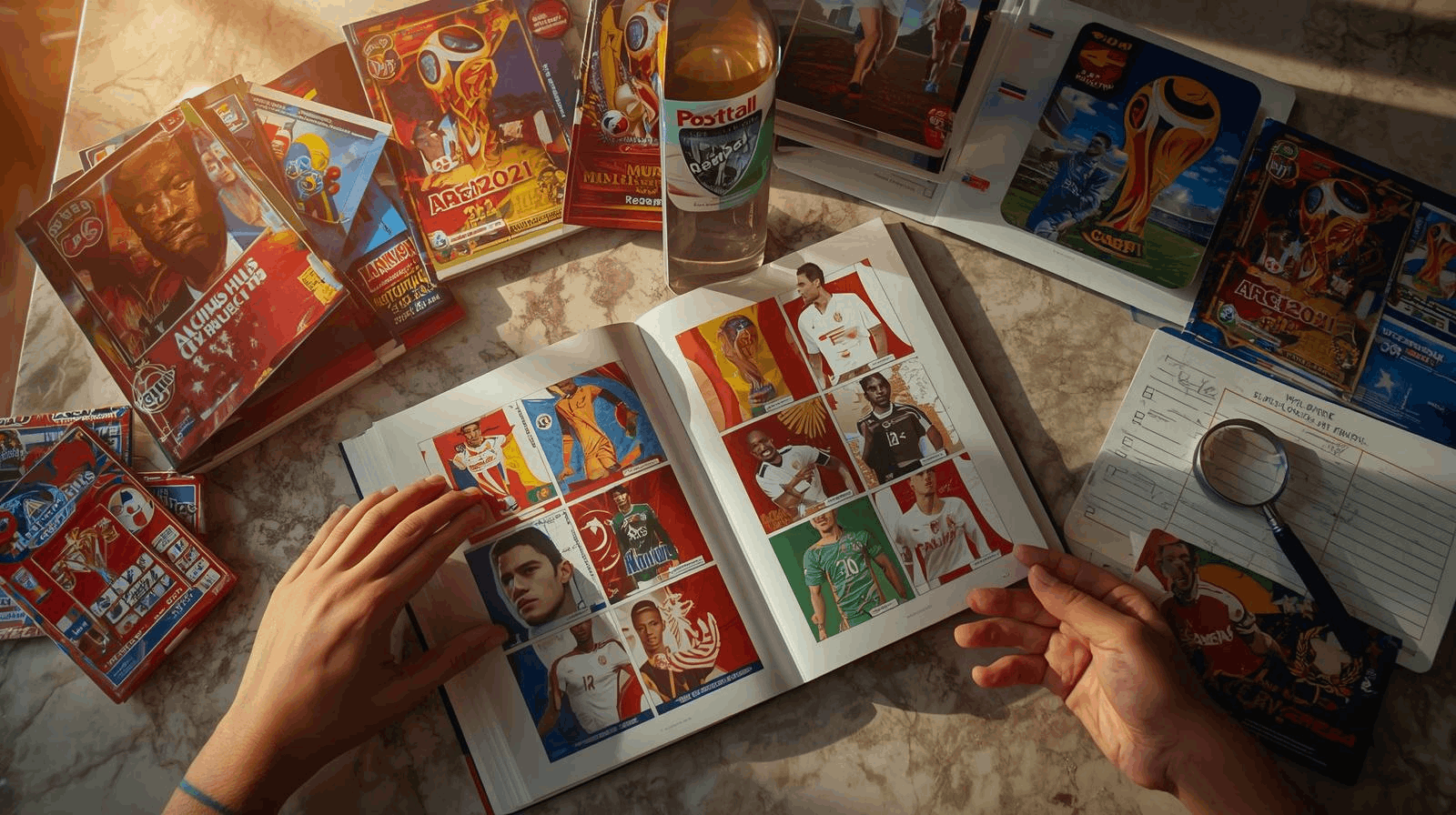
The raw math on any full-sized Panini tournament album is sobering once you lay it out. An album covering a major tournament runs hundreds of stickers. Each pack holds five to seven.
Duplicates are unavoidable, and they pile up fast. A collector who buys their way to completion without organized swapping spends far more than one who builds a swap network from the first week.
The Swap Strategy That Actually Works
The collectors who finish albums fastest are aggressive swappers, not aggressive buyers. The smart move is to stop buying new packs around 60% completion and shift most of your effort into swapping.
These are the practical steps experienced collectors use:
- Keep a running checklist of missing stickers from the first day. The album’s built-in checklist works, but a shared digital list speeds up swap negotiations with online partners.
- Join at least one active swap group before opening your first pack. Getting established early means access to more trade partners when your duplicate stack grows.
- Offer duplicates fast. Holding stickers while waiting for perfect trades slows everyone down and makes you a less attractive partner.
- Find swap partners at a similar completion percentage. Someone at 40% needs different stickers than someone at 80%, so matched stages produce more useful trades.
When Rare Stickers Turn Into Something More Than a Hobby
A small corner of the market treats football stickers as collectibles with real monetary value. Sealed packs from famous tournament years, error prints, and limited regional editions sell at auction. Rare sticker values have reached hundreds or thousands of dollars in documented cases.
This side of collecting is niche and separate from casual album completion. If you find old sealed packs from 1990s or early 2000s World Cup runs sitting in a box somewhere, check their value before opening them.
Vintage and rare Panini lots on eBay show current collector pricing for older sealed material.
Getting Started Without Making Expensive Mistakes
New collectors tend to make the same errors. They buy too many packs too early, skip swap groups, and end up with hundreds of duplicates and no clear path to completion. A smarter starting sequence avoids most of that frustration.
These steps help from the beginning:
- Buy a starter album and one multipack set to start. Resist buying more until you have assessed what you already have.
- Register your missing stickers immediately on the album’s official platform if one exists. Panini runs direct purchase programs for specific missing stickers on some albums.
- Find a local or online swap group before your duplicate stack grows. Early entry means better access and more trade options.
- Set a monthly budget and treat it as fixed. The open-ended nature of pack buying is precisely where costs spiral for families and adult collectors alike.
Digital Sticker Albums: Useful Addition or Distraction?
Digital football sticker albums exist and have a real following. The digital format removes duplicate sticker frustration and eliminates physical storage needs entirely.
My honest take: digital collecting scratches a different itch than physical albums.
The tactile experience of placing a sticker on a page is genuinely different from a screen interaction. Digital suits collectors who want the completion satisfaction without the clutter.
The two formats are not really competing for the same person. Some collectors run both in parallel, treating the physical album as the primary project and digital as a side activity during downtime.
Questions People Ask About Football Sticker Collecting
Q: How do I avoid spending too much money on sticker packs? Set a hard monthly budget before you buy your first pack. Join a swap group early and shift to trading rather than buying once you pass roughly 60% completion. The swap network is where albums get finished, not the checkout line.
Q: Are Panini football stickers worth collecting for investment purposes? Vintage sealed packs and error prints from famous tournament years can sell for hundreds or thousands of dollars at auction. Current album stickers have almost no investment value unless they are misprints or limited regional editions. Collect for the experience, and treat any monetary upside as a bonus.
Q: Can I complete a football sticker album without joining a swap group? Technically yes, but the cost and duplicate pile become significant. The swap community exists precisely because solo buying to completion is inefficient. Two collectors swapping duplicates are both better off than each buying individually.
Q: Are digital sticker albums better for kids than physical ones? Physical albums have a tactile and social dimension that digital versions do not replicate. Kids who collect physical stickers have a concrete object to share, show, and trade with peers. Digital suits older collectors who prefer low maintenance. For children, physical wins.
Q: What makes some football stickers rare? Misprints, limited regional print runs, short print production cycles on specific players, and sealed packs from historic tournament years. Rarity in current albums tends to be driven by limited short-print stickers inserted at lower rates per box, similar to trading card mechanics.
Conclusion
Football sticker collecting in 2026 rewards collectors who treat swapping as seriously as buying new packs from day one. The cost of buying your way to a complete album solo is far higher than any starter pack suggests.
Panini leads on availability, but regional and Topps editions offer a steeper challenge for collectors who want genuine rarity.
Start with a budget, join a swap group early, and the finished album at the end of a tournament season makes all of it worth it.