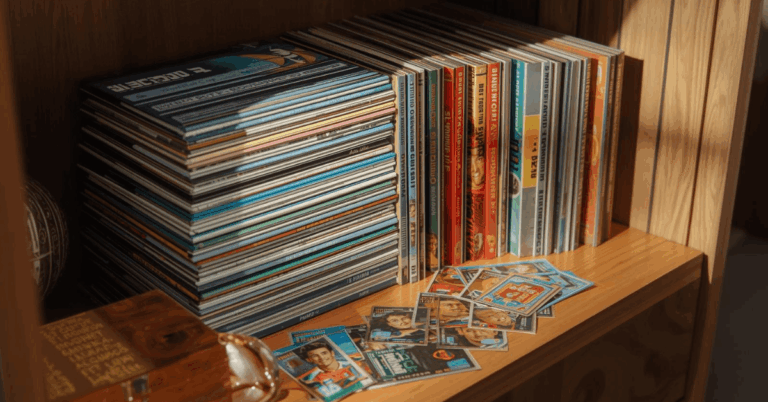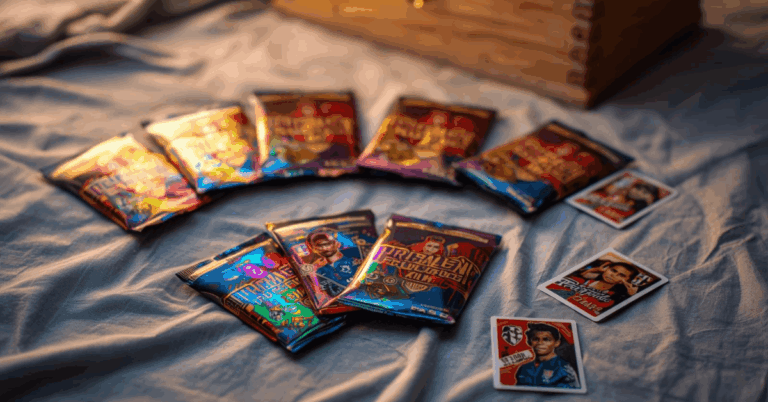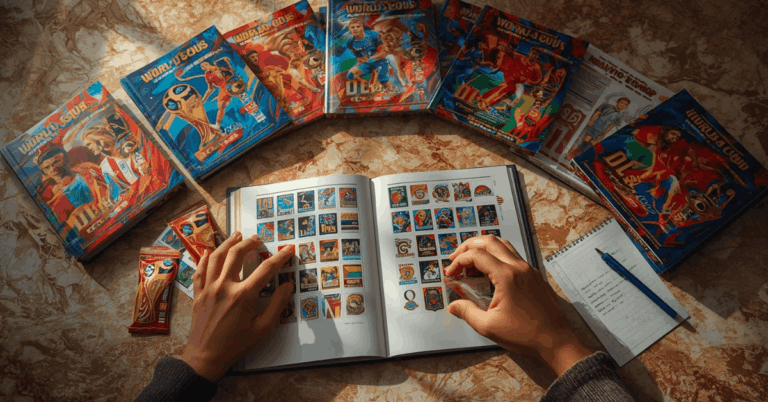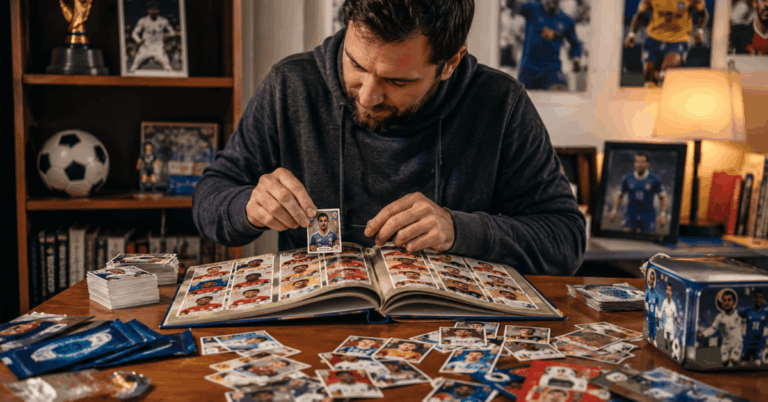
There’s a specific feeling that hits when a shiny drops out of a fresh Panini pack. Your pulse does something ridiculous. That feeling doesn’t stop when you’re thirty-five.
Adult collectors returning to World Cup sticker albums in 2026 are finding a market that looks nothing like their schoolyard trading days. Prices have moved. Platforms have multiplied.


Rare prints, debut stickers, and error cards now change hands for thousands of dollars on global platforms like eBay. The World Cup sticker market has gone serious.
The widely shared advice is to collect as a financial investment. I disagree with that framing, and the data from the 2006 and 2018 tournament markets explains exactly why.
Why Some World Cup Stickers are Worth More Than Others
Not every sticker is created equal, and the gap between a standard base sticker and a rare variant can be enormous. Scarcity, a player’s career arc, and printing oddities all pull values in different directions.
Understanding how each factor works is what separates a smart collector from someone who consistently overpays.
Several forces determine how much a sticker is actually worth:
- Print rarity: The fewer copies that exist, the higher the demand when collectors compete for a limited supply.
- Player popularity: Top scorers and rising stars create spikes in demand, especially during or right after a tournament.
- Condition: A hairline crease can dramatically affect selling prices. A mint sticker is worth considerably more than one with even light handling wear.
- Errors and variations: Misprints, wrong logos, and unusual color borders turn ordinary stickers into collector prizes.
- Story value: A sticker tied to a debut, a farewell, or a defining moment often holds more emotional weight than its market price captures.
That last point is where most pricing discussions go quiet. The story attached to a sticker frequently matters as much as any grading certification.
Debut Stickers and the Rookie Effect
A player’s first appearance in a World Cup sticker album carries a weight that later editions rarely match. Lionel Messi’s debut sticker from the 2006 Germany album is one of the most referenced examples in collector circles.
Authenticated copies have sold for several thousand dollars, depending on condition.
That demand makes sense. The 2006 Messi sticker captured a version of the player before the world had decided what he would become.
Kylian Mbappé’s 2018 Russia debut sticker followed a similar pattern. Collectors weren’t buying a known quantity at the time. They were buying a question mark that answered itself spectacularly.
My take: debut stickers are the most defensible long-term hold in any World Cup collection, because the career narrative only deepens over time for players who go on to dominate.
“Last Tournament” Stickers and the Retirement Surge
This is the angle I rarely see covered at the same depth. When a generational player exits the World Cup stage, their final album appearance becomes the closing chapter of a story millions of people lived through.
Zinedine Zidane’s 2006 Germany sticker and Andrés Iniesta’s 2018 Russia sticker both gained retroactive collector weight after those tournaments ended. Nobody knew in advance these would be final appearances. The market figured it out slowly, and prices crept upward over the following years.
The retirement surge is quieter than a rookie spike, but it tends to be more stable. Collectors who track career timelines and position themselves ahead of a player’s likely final tournament are sitting on something the broader market hasn’t priced in yet. That’s where I’d look first.
Error Prints and Special Editions: The Scarcity Game
Printing errors are the wildcards of sticker collecting. A misprint is not a defect to serious collectors. A misprint is a low-supply event nobody planned for, which makes it rarer than any intentional limited edition.
What Makes a Printing Error So Collectible
Missing logos, wrong jersey numbers, or unusual color borders turn ordinary stickers into something collectors can call one-of-a-kind. The production run for a corrected version replaces the error print, meaning the original never gets restocked.
Intentional special inserts distributed to specific regions add another layer. A sticker released only in select countries faces a genuine supply problem for collectors outside those markets.
Finding one in a pack from the right region can feel almost unreal, which is exactly the reaction that drives prices upward.
Error prints usually have a corrected version in circulation. A side-by-side comparison between the error and the corrected print is the most reliable way to confirm what you have before paying a premium.
Where Collectors Find Rare Stickers in 2026
The trading floor has shifted. Physical swap meets at schools, malls, and stadiums still happen, and the social energy at those events is hard to replicate online. Swapping a sticker face-to-face is a fundamentally different experience from clicking “buy it now.”
Online Platforms vs. Physical Swap Meets
| Platform Type | Range of Access | Counterfeit Risk | Social Element |
|---|---|---|---|
| eBay / Mercado Libre | Global | Moderate | Low |
| Panini Official Platform | Current releases only | Low | Low |
| Facebook / WhatsApp Groups | Local and global | Low (community-policed) | High |
| Physical Swap Meets | Local only | Very Low | Very High |
No single channel wins outright for every collector or every search.
The Panini official platform is worth bookmarking for current releases and digital swap features, though digital stickers have not replaced paper ones for the vast majority of serious collectors.
There is still something about the physical format that the digital version hasn’t matched.
Community groups on Facebook and WhatsApp tend to have lower prices and more honest trades because members police each other against counterfeits. That informal accountability is something the large marketplaces struggle to replicate.
Price Trends and What the Market Tells You
Prices for rare World Cup stickers don’t move in a straight line.
A tournament cycle creates its own rhythm: anticipation drives prices up in the months before the competition, peak excitement hits during the tournament itself, and then the market cools.
Record Sales That Changed Collector Expectations
A Lionel Messi rookie sticker from 2006, graded and authenticated, has sold for figures that surprise people who still think of stickers as playground currency. Cristiano Ronaldo’s debut stickers follow close behind in collector prestige.
Pelé and Maradona stickers from past decades sit at the top of the historical tier and have maintained collector interest across generations.
For a broader view of how authenticated collectible grading works, the PSA grading standards for trading cards give a useful reference point, even though sticker authentication is less standardized than card grading.
I think the advice to grade and slab a World Cup sticker as a guaranteed value-hold is oversold. The authentication market for stickers is far less standardized than trading cards.
A PSA grade on a basketball card has decades of market consensus behind it. A graded sticker is newer territory, and prices aren’t guaranteed to behave the same way.
Casual collectors should prioritize condition and storage over certification costs. A clean, unpeeled sticker in a proper sleeve, kept away from sunlight and moisture, is the more practical approach for anyone not trading at the high end.
How to Start Collecting Without Getting Burned
Getting into World Cup sticker collecting without overpaying takes a few habits worth building early. These are the ones that matter most before you spend anything:
- Set a clear focus first: Full tournament sets, star players only, or a single national team. Unfocused buying leads to duplicates you can’t trade and money you can’t recover.
- Handle stickers with care: Condition matters at every price point, and a hairline crease that looks minor can slash resale value. Sleeve them immediately after opening.
- Trade before you buy: Swapping builds community connections and cuts the cost of filling album gaps, especially when tournament buzz inflates prices for common stickers.
- Verify before paying: Counterfeit stickers exist. If a price sounds too low for a rare sticker, check authentication through experienced community members before committing.
World Cup Album Editions That Shaped the Hobby
The Mexico 1970 album is considered the origin point for serious collectors. Italia 1990 and Brazil 2014 are frequently cited for their sticker quality and player rosters.
Panini’s recent additions, including women’s tournament editions and regional exclusives, have expanded the collector base in ways still playing out.
Whether those new categories produce the kind of long-term collector value that classic editions hold is an open question. My guess is that regional exclusives will age better than the digital versions.
Questions People Ask About World Cup Sticker Collecting
Q: Are World Cup stickers a good investment in 2026? Some stickers, particularly rookie editions and error prints, have sold for thousands of dollars in authenticated condition. Prices are volatile around tournament cycles, and the resale market is less predictable than most investment guides suggest. Collect because you love it first, and treat any financial upside as a bonus.
Q: Where is the best place to buy rare Panini stickers online? eBay and Mercado Libre are the largest global marketplaces for rare stickers. Facebook groups and WhatsApp collector communities tend to have lower prices and more honest trades because members police against fakes. The Panini official platform covers current releases and digital swaps.
Q: How do I spot a real error print sticker? Error prints usually have a corrected version in circulation, so direct comparison between the two versions is the clearest test. Missing logos, wrong colors, or misspelled names appearing on only one production run are the most reliable tells. Collector forums with long-term members are the fastest way to confirm a suspected error before paying a premium.
Q: Which World Cup album editions are the most collectible? The Mexico 1970 album carries the most historical prestige among dedicated collectors. Italia 1990 and Brazil 2014 are frequently mentioned for their player rosters and sticker quality. Error prints and regional exclusives from any year can outperform standard collectible editions based on scarcity alone.
Q: Are digital Panini stickers worth collecting? Panini has pushed digital versions for recent tournaments, and digital stickers have their audience. Physical stickers have retained stronger collector demand, and paper editions are still what drives the high-end market. Digital versions are a supplement for now, not a replacement.
Conclusion
World Cup sticker collecting in 2026 rewards patience, focused buying, and a real eye for player narratives. Retirement stickers and debut editions carry stories that raw market prices rarely manage to fully capture.
The collector who tracks career arcs alongside condition grades tends to find trades that purely price-focused buyers miss. Start with one album, one player, and the sticker that meant something to you first.