Many dog owners want the best for their pets, often including natural remedies or herbs in their home routines.
Yet, not all herbs are safe for dogs. Some can be surprisingly toxic, even in seemingly harmless amounts. This guide shares practical, evidence-based details about herbs that may pose a risk to your dog’s health.



It’s especially relevant for pet owners who enjoy gardening, home cooking, or using herbal supplements at home. The goal is to highlight the worry areas and offer ideas to help make safer decisions.
Why Understanding Toxic Herbs Matters for Dog Owners?
Herbs are common in kitchens and gardens, but curious dogs can stumble across them easily. Some herbs known for their health benefits in humans can cause mild to severe reactions in dogs. Awareness can go a long way toward preventing accidental poisoning.

It’s easy to overlook the risk when herbs seem harmless, yet even small amounts can cause irritation or more serious health effects.
For owners who share food or have pets around gardens, knowing which plants require special caution is important—even if accidents seem unlikely.
Most Common Toxic Herbs for Dogs
Not every herb will be dangerous to every dog, but some stand out as higher risk. Most veterinarians and animal care experts observe reactions or report cases linked to a few specific herbs.
Chives and Onions
Both chives and onions, including dried, fresh, cooked, or powdered forms, can be toxic. They contain compounds that damage a dog’s red blood cells, sometimes leading to anemia.
Symptoms might include weakness, rapid breathing, or even collapses if large amounts are consumed. It’s sometimes tricky since onion powder is a common ingredient in sauces, broths, and snacks.
Garlic
Garlic appears, on many blogs, to be a health tonic for people. For dogs, however, it’s among the more potent toxic herbs. Even small amounts over time may cause gastrointestinal upset or, in larger quantities, life-threatening anemia.
Pennyroyal
This herb, once used as an insect repellent, can be fatally toxic to dogs. Pennyroyal oil, in particular, is a serious liver toxin when ingested or even sometimes when applied to the skin. Signs might include vomiting, drooling, or lethargy.
Comfrey
Some herbalists prize comfrey for its healing properties. Yet, comfrey contains compounds known as pyrrolizidine alkaloids, which can damage the liver in dogs. Long-term or repeated exposure may pose the largest risk.
Foxglove
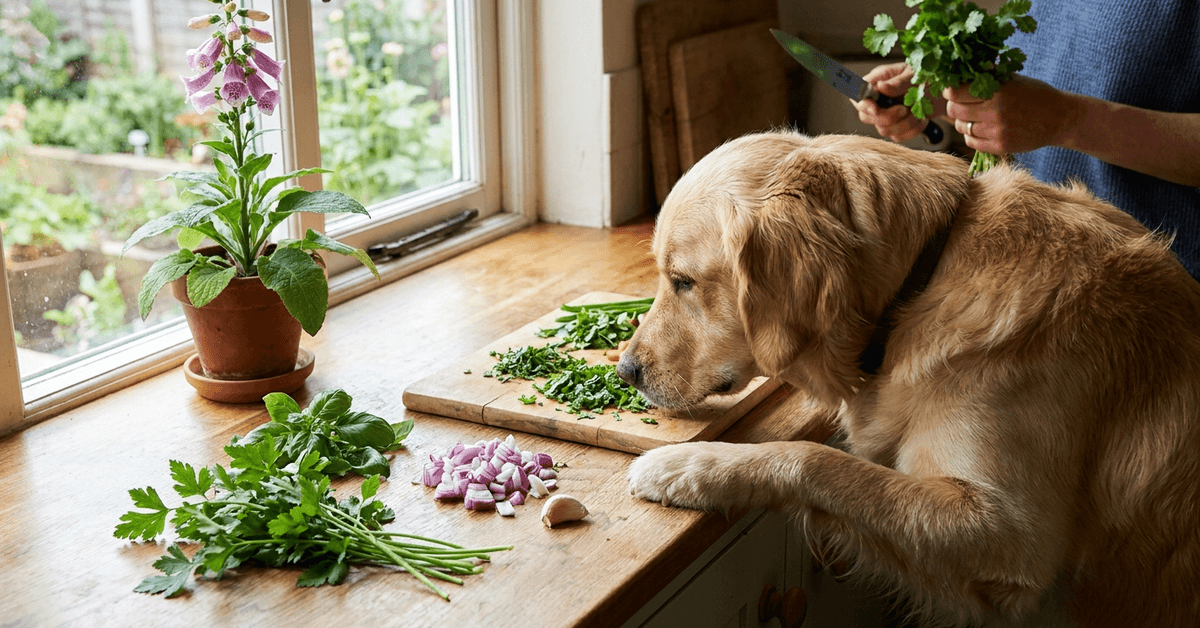
This one’s a bit confusing: foxglove is more of a garden flower than a culinary herb, but some home gardeners attempt to use it. In any form, it contains cardiac glycosides that disrupt the dog’s heart rhythm. Even tiny amounts are a concern.
Others to Watch
- Nutmeg – neurotoxic in high doses or with repeated exposure
- Oregano – can irritate digestive tract, especially in oil form
- Rhubarb leaves – oxalate crystals can cause kidney problems
- Horehound – unlikely to be fatal, but may cause vomiting or diarrhea
- Yarrow – associated with drooling, vomiting, and mild skin irritation
How Are Dogs Exposed to Toxic Herbs?
Some exposures are almost accidental. Dogs sniff or nibble plants in the yard, or they may lick utensils after food is prepared with herbs. Dried herbs dropped on the floor or supplement capsules can be easy targets for an inquisitive pet.
In multi-pet homes, dogs might also eat treats or foods meant for another animal, especially if those contain herbal ingredients.
Occasionally, human foods with added spices or seasonings are another culprit—dog-safe recipes are worth reviewing for accidental risks.
Warning Signs of Herb Toxicity in Dogs
Spotting toxicity early could make a difference. Dogs rarely react to herbs with the same symptoms as humans, and in many cases, the response is subtle or delayed.
Common Symptoms
- Drooling, pawing at the mouth, or sudden loss of appetite
- Vomiting or diarrhea (may be mild or severe)
- Weakness, pale gums, or rapid breathing (possible anemia)
- Lethargy or unusual behavior, like shivering or restlessness
- Tremors or seizures, especially with nutmeg or foxglove
- Abdominal pain or swelling
It’s easy to miss some of these warning signs, especially if a dog eats herbs while unsupervised. Symptom onset can range from minutes to days, depending on the herb and the quantity eaten.
Tips for Reducing the Risk of Herb Toxicity
Protecting dogs from toxic herbs doesn’t require eliminating all plants from your home. Instead, some practical habits can help reduce risk while still enjoying gardening or cooking.
Pet-Proofing Kitchens and Gardens
- Grow risky herbs in raised planters or behind fences where dogs can’t reach
- Store dried herbs, teas, and supplements out of reach
- Keep an eye on dropped food or herbal supplements during meal prep
Check Ingredient Labels
Human food frequently contains onion, garlic, or other herbs that aren’t dog friendly. Even ‘natural’ pet products may contain traces of risky plants. Scanning the ingredient list helps catch surprises before they reach your dog.
Use Alternatives with Care
There might be dog-safe herbs or flavorings, like parsley or basil, but even these should be used in moderation. When in doubt, consulting a veterinarian about any new supplement or herb is a safe plan. It’s better to be slightly overcautious.
Safe Herb Choices for Dogs
Some herbs are generally safe when used in moderation. These can provide flavor or mild benefits, but should never replace professional veterinary advice, especially for pets with known health issues.
- Parsley (flat-leaf preferred, curly may cause gastric upset in some)
- Basil (fresh, in small amounts)
- Coriander and cilantro (in limited quantities)
- Rosemary (small sprigs; avoid essential oils)
The above are typically well tolerated but, as with all foods or supplements, it’s best to introduce them gradually and watch for individual reactions.
What to Do If Your Dog Ingests a Toxic Herb?
If you suspect ingestion of a hazardous herb, monitoring your pet closely makes sense. If any symptoms appear or if you’re unsure about the herb’s safety, a prompt call to your veterinarian or a local animal poison control hotline may help.
Some herbs act quickly, while others may not show their true effect for a few days. Erring on the side of caution is usually the safest approach.
Legal and Regulatory Considerations
While there are no blanket bans on growing or possessing most herbs, some toxic varieties (like foxglove or pennyroyal) are recognized by regulators and animal safety organizations as hazardous to pets.
If you’re involved in pet care or operate a dog-friendly business, reviewing applicable guidelines in your region may add an extra layer of protection.
Trusted resources, such as the ASPCA Animal Poison Control Center or the Pet Poison Helpline, offer reliable information and may provide up-to-date guidance.
Conclusion
Toxic herbs for dogs can create serious risks, especially when pets access kitchen ingredients, garden plants, oils, or supplements without supervision.
Common concerns include chives, onions, garlic, pennyroyal, comfrey, foxglove, nutmeg, oregano oil, and rhubarb leaves.
Dog owners should watch for unusual symptoms, keep risky herbs secured, and confirm any new herb or supplement with a veterinarian first.
With simple prevention and quick action when needed, pet owners can make kitchens and gardens much safer for their dogs.