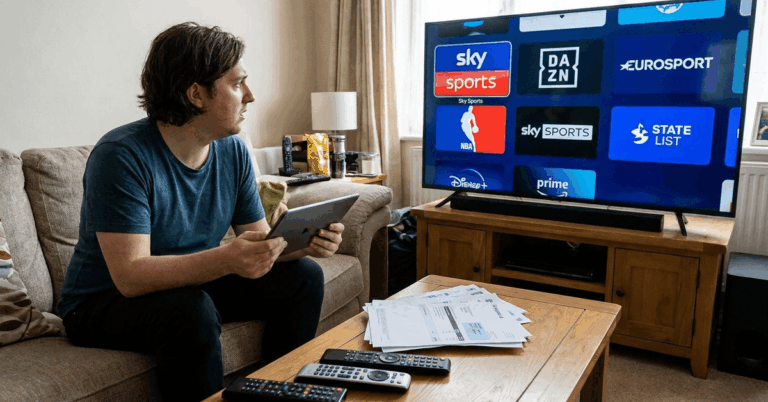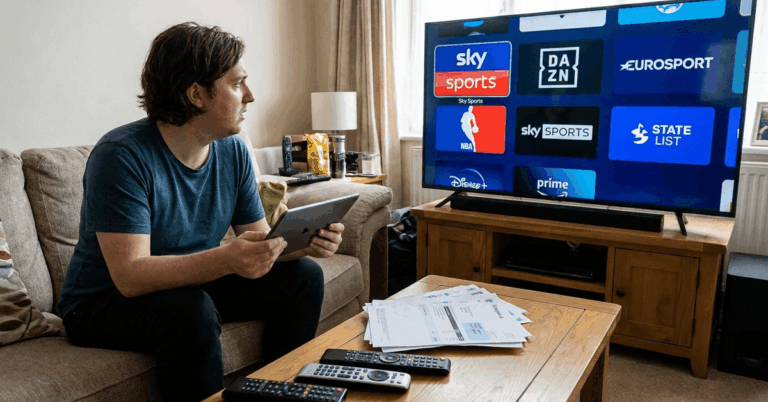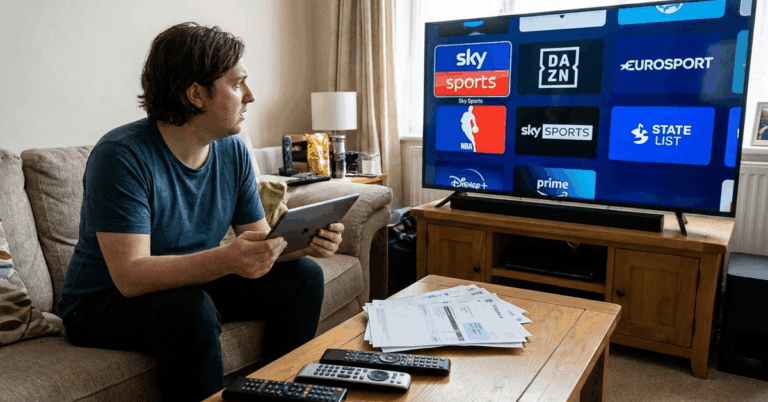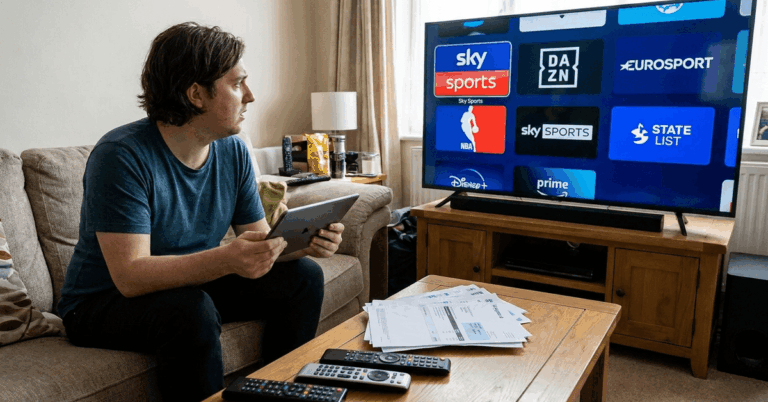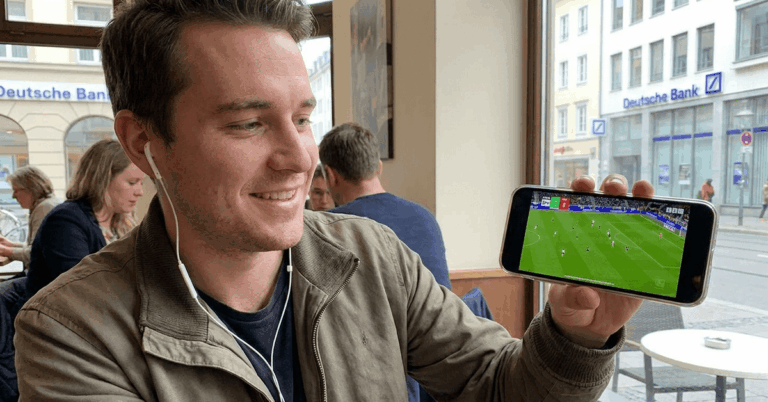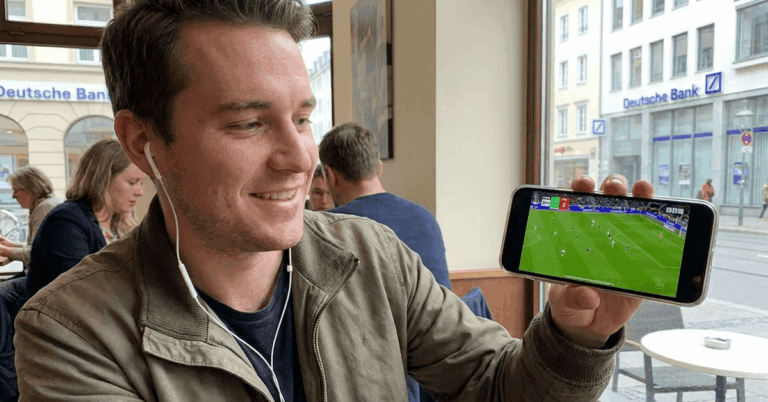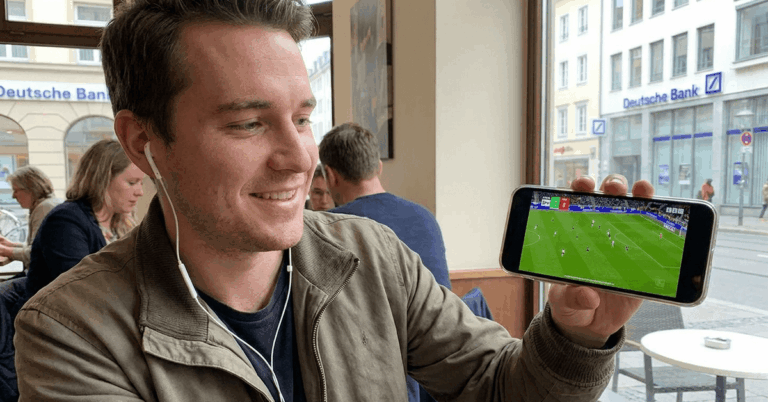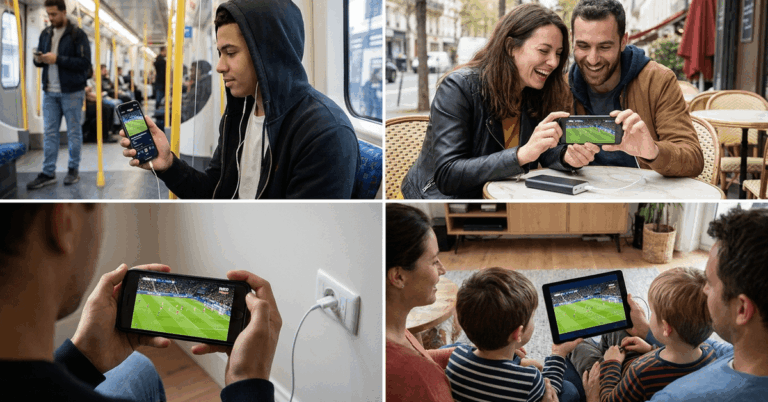
Imagine a Saturday afternoon. La Liga is on, the Champions League semifinal is midweek, and your Bundesliga team plays Sunday morning. Three matches, three different broadcasters, three separate subscriptions.
That math is exactly why free mobile football streaming keeps growing across Europe. Fans in Spain, Germany, France, and Portugal are hunting for ways to watch without stacking monthly bills. But “free” is doing a lot of heavy lifting in that sentence. The apps, sites, and workarounds fans use to stream football on their phones each come with trade-offs that rarely get mentioned.


This is the part where things get interesting: the real cost of free football streaming has nothing to do with malware pop-ups.
Why Paying for One Streaming Service Doesn’t Solve the Problem
Broadcast Rights Are Split Across Too Many Platforms
The standard advice floating around is simple: just pick one good streaming service and pay for it. I think that advice ignores how broadcast rights work in Europe in 2026, where a single country might split football rights across three or four platforms.
A fan in Spain trying to follow La Liga, the Champions League, and the Europa League could need Movistar+, DAZN, and a third service depending on the competition. That adds up fast.
A casual viewer who wants to catch a few matches per week faces a monthly bill that can hit €40 or more just for football.
This fragmentation is the engine behind free streaming demand. Fans are not choosing piracy over convenience. They’re choosing piracy because the legal option requires three apps, three passwords, and three billing cycles.
The Freemium Trap Nobody Talks About
Some leagues and broadcasters have started offering freemium models: a handful of free matches per month, with premium tiers behind a paywall. Sounds reasonable on paper.
The catch? The free matches are almost always the least-watched fixtures. The derby, the title decider, the Champions League knockout round: those stay locked behind the paywall.
The freemium tier is a teaser, and it works because it gets fans to install the app and create an account.
Once your payment details are saved and notifications are pinging you about locked matches, conversion to paid becomes a matter of time.
I would compare the freemium model in football to free-to-play mobile games: the product is designed to make free feel incomplete.
Where Fans Find Free Football Streams on Mobile
Official Broadcaster Apps and Public Networks
Legitimate free streams do exist. Public broadcasters in several European countries air select matches without a subscription. Local broadcaster apps sometimes carry league games, especially lower-division or domestic cup fixtures.
Services like Pluto TV occasionally carry live sports content depending on region. The coverage is limited, but these platforms are safe to use and don’t require handing over payment details.
The limitations are real, though. Coverage skews heavily toward domestic leagues, and the bigger European competitions are rarely included in free tiers.
Third-Party and Unofficial Streaming Sites
Then there’s the other side. Unofficial sites and apps promising free live football are everywhere, and the experience ranges from surprisingly smooth to borderline unusable.
Some of these platforms run on ad revenue, loading pages with pop-ups, forced redirects, and banners that cover half the screen.
Others require downloading browser extensions or apps that request permissions no streaming service should need: access to contacts, camera, or storage.
The reliability is a coin flip. Streams cut out at halftime. Quality drops from 720p to a blurry mess right when the striker is through on goal. And privacy risks are hard to measure, because the operators behind these sites are rarely identifiable.
Language and Regional Access Shape Everything
Free streaming demand spikes in countries where broadcast rights fragmentation is worst. Spain, Germany, France, and Portugal all have complex rights distributions across multiple networks.
Local commentary matters too. A fan in Portugal wants Portuguese-language coverage of the Primeira Liga, not an English-language feed.
Free streams that carry local commentary in the correct language have stronger pull than generic international feeds.
The Hidden Cost of Free Streaming: The Delay Problem
Every article about free football streaming covers malware. Every article mentions legality. Almost none of them talk about stream delay, and I think it’s the single biggest downside of watching football through a free source.
Why 30 to 60 Seconds Changes Everything
Free and unofficial streams typically run 30 to 60 seconds behind live broadcast. That might sound minor. It is not.
Football is a social sport. Fans text group chats. They check Twitter. They react on forums and apps during the match. A 45-second delay means your friend on a paid DAZN stream is celebrating a goal before you’ve even seen the attack build up.
That delay turns a shared experience into an isolated one. The spoiler effect is constant and annoying, and it compounds across a full 90-minute match.
After a while, fans on delayed streams stop checking their phones during games. They disconnect from the real-time conversation that makes live football special.
The Delay Gets Worse on Mobile Networks
On a home Wi-Fi connection, the delay might sit at 30 seconds. On mobile data during a commute or at a café, buffering adds another layer. The stream pauses, reloads, and suddenly you’re a full minute behind.
Mobile football streaming is marketed as the “watch anywhere” solution. But that flexibility comes with a quality trade-off that fans rarely consider until they’re sitting in a bar, watching a stream buffer while everyone around them reacts to a penalty.
| Feature | Official Paid Stream | Free Legitimate Stream | Unofficial Free Stream |
|---|---|---|---|
| Stream Delay | Under 10 seconds | 15 to 30 seconds | 30 to 60+ seconds |
| Match Coverage | Full league and European competitions | Select domestic matches only | Varies wildly by source |
| Ad Experience | Minimal or none | Standard pre-roll and banners | Aggressive pop-ups and redirects |
| Device Security | Safe | Safe | Risk of malware and data exposure |
The clearest takeaway: unofficial streams trade security and timing for zero cost, and that timing gap erodes the social side of watching football.
Smart Ways to Stream Football on Mobile Without Getting Burned
Not every fan can afford three subscriptions, and not every fan should risk malware-laden sites. A middle ground exists, but it takes a bit of planning.
Here’s what to check before tapping play on any mobile stream:
- Start with official broadcaster apps in your country, even if coverage is limited; these are always the safest and most reliable option
- Read app reviews on Google Play or the App Store before downloading anything unfamiliar, and watch for reviews mentioning excessive permissions or forced ads
- Use a privacy-focused browser like Firefox Focus or Brave when visiting any streaming site, and never enter login credentials on a site you haven’t verified
- Turn off auto-download and plug-in permissions on your mobile browser to block forced installs from sketchy ad networks
Beyond safety, a few habits make free mobile streaming less frustrating:
- Mute group chats during matches to avoid spoilers from friends on faster streams
- Stick to Wi-Fi when possible, because mobile data adds buffering time on top of the existing delay
- Check if your local club has a direct streaming option through their official site or app, since some smaller clubs now stream their own matches
Some clubs and lower-tier leagues have started offering direct streaming through their own digital channels. The UEFA official site lists broadcasting partners by country, which helps verify whether a stream source is licensed.
How Free Streaming is Changing the Way Fans Watch Football
The 90-minute sit-down viewing session is fading. Mobile streaming, free or paid, is reshaping when and how fans engage with matches.
Half-Match Viewing is the New Normal
Plenty of fans now tune in for the second half only, or watch highlight clips within minutes of the final whistle. The full-match commitment feels heavy when the phone offers a dozen other things to do at the same time.
This shift matters for leagues and broadcasters because ad revenue models built around full-match viewership don’t translate well to a fan who watches 35 minutes while also scrolling social media.
Post-Match Conversation Starts Before the Match Ends
Group texts, Reddit threads, and app-based live chats now run throughout the game. Fans react in real time, share clips, and debate calls before the referee has even blown the final whistle.
That constant conversation loop is part of why free streaming stays popular despite its downsides. The community element of football is moving from the stadium and the living room to the phone screen, and free access keeps the barrier low.
Questions People Ask About Free Mobile Football Streaming
Q: Can I watch Champions League matches for free on my phone? Some broadcasters air select Champions League matches on free tiers, but knockout rounds and finals are almost always locked behind a paid subscription. Check your country’s broadcasting partner list on UEFA’s site for specifics.
Q: Is using a VPN to access free streams from another country legal? VPN use itself is legal in most European countries. But using a VPN to bypass geo-restrictions on a broadcasting platform usually violates that platform’s terms of service, which could result in account bans.
Q: Why do free football streams buffer so much on mobile? Unofficial streams run on overloaded servers with no quality guarantees. Add mobile network variability on top of that, and buffering becomes frequent. Paid services invest in content delivery networks that handle traffic spikes during big matches.
Q: Are there any free football streaming apps that are completely safe? Official broadcaster apps and public network apps are safe. Anything outside those categories carries some level of risk, whether from aggressive ads, data collection, or malware. Stick to apps listed on verified app stores and read recent user reviews.
Q: Do clubs stream their own matches for free? A small number of clubs, especially in lower divisions, have started streaming matches through their own websites or apps. Top-flight clubs rarely offer this because live rights are sold to broadcasters under exclusive contracts.
Conclusion
Free mobile football streaming in 2026 solves one problem while creating several others worth knowing about. The delay, the fragmentation, and the privacy trade-offs are part of the real cost.
Fans who plan ahead and stick to verified sources can still catch plenty of football without paying. The question worth asking is whether the 45-second spoiler gap bothers you more than the monthly bill.