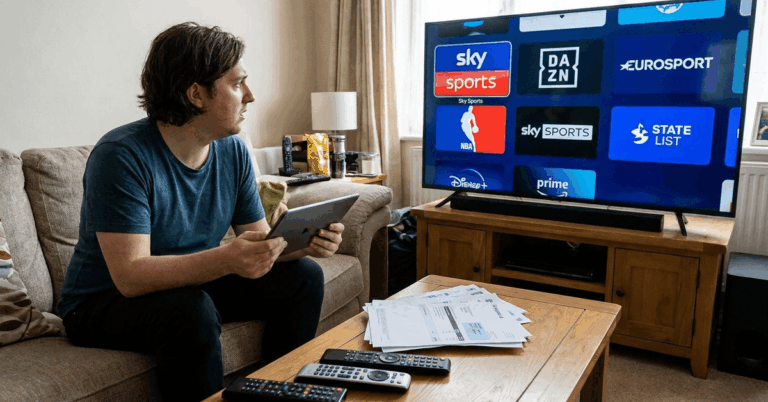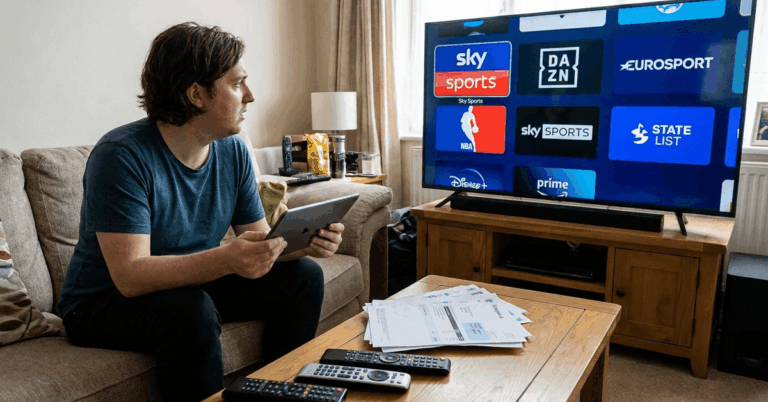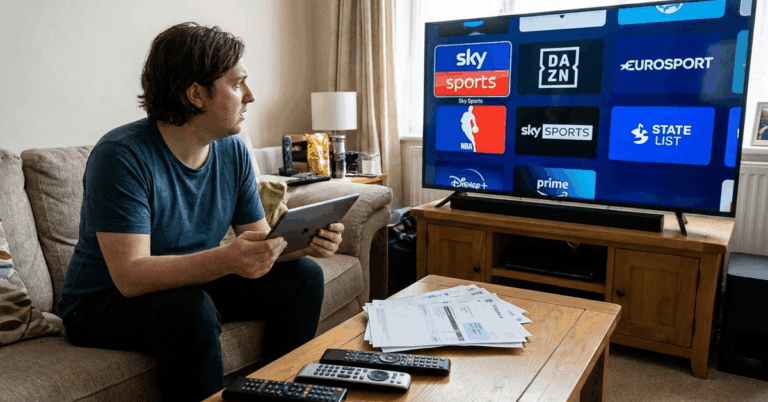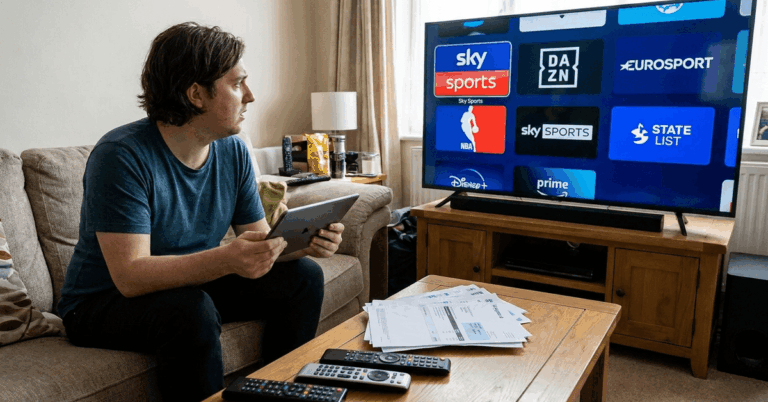
A Saturday night kickoff is ten minutes away. The pay-TV subscription costs €50 per month, and half those channels are cooking shows and soap operas nobody asked for.
So the laptop comes out. A browser tab opens. The search bar gets a familiar query: free football streaming. Across Spain, Germany, France, and Portugal, fans are abandoning traditional TV packages in growing numbers. The shift has less to do with piracy culture and more to do with a pricing model that still sells football like it’s 2005.



This tension between what fans want and what broadcasters charge is reshaping how football gets watched across Europe. And the answers are messier than any single article usually admits.
Why Pay-TV Pricing Pushes Football Fans Toward Free Streams
The conversation about free football streaming in Europe always starts in the same place: price. But the specific math is worth spelling out, because it tells a story about bad product design more than fan greed.
The Bundling Problem No Broadcaster Wants to Fix
A basic sports pay-TV package in Spain, Germany, France, or Portugal runs between €30 and €70+ per month.
That price tag buys access to hundreds of channels. The problem is that a football fan who cares about La Liga, Ligue 1, or the Bundesliga might only watch three to five matches per week.
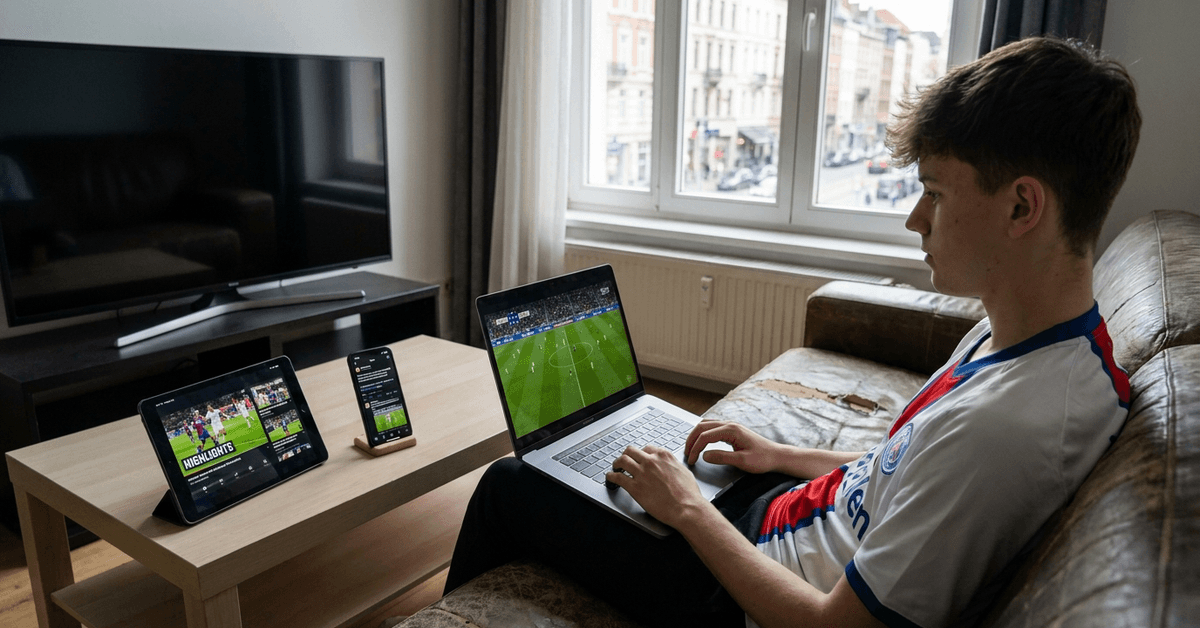
Compare that cost to the average across a streaming-only month. A casual fan paying €50 for a TV bundle to watch eight matches is spending roughly €6 per game.
That same fan could follow the same matches through free-to-air broadcasts, YouTube highlights, club apps, and radio commentary for €0.
I think the common advice to “just split a subscription with friends” misses the point when platforms like YouTube have already broadcast Champions League matches live to certain European markets for free.
The pricing gap between what broadcasters charge and what fans find acceptable is growing. Subscription splitting treats the symptom. The disease is the bundle itself.
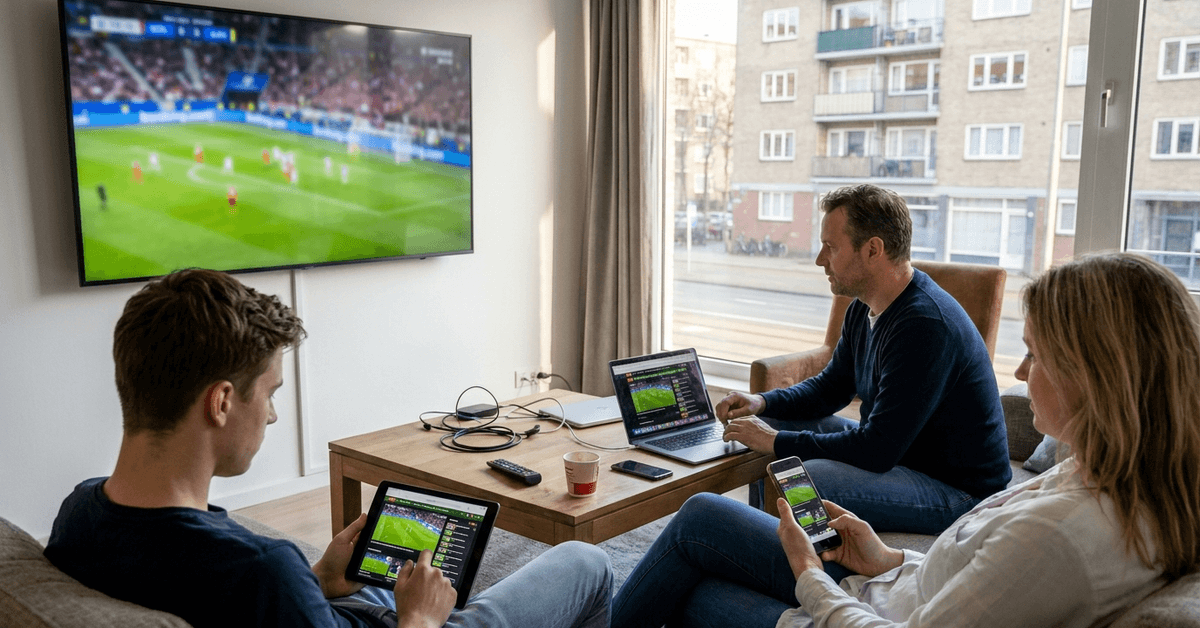
Younger viewers are the first to walk away. Students on tight budgets, renters who move between cities, or fans who follow two clubs across two leagues: none of these people want a 12-month TV contract locked to one address.
| Factor | Pay-TV Bundle | Free Alternatives |
|---|---|---|
| Monthly cost | €30 to €70+ | €0 |
| Channel count | 100 to 300+ (mostly unwatched) | Specific match access only |
| Contract length | Typically 12 months | None |
| Device flexibility | Often limited to set-top box | Any device with a browser |
| Availability of all matches | Depends on broadcasting rights | Patchy and unpredictable |
The takeaway: pay-TV gives you everything except flexibility, and free alternatives give you flexibility but almost no reliability.
Where European Fans Find Free Football Streams in 2026
Methods for watching football online for free vary wildly depending on the country and the specific match. Some options are perfectly legal. Others sit in a gray zone that copyright law hasn’t fully caught up with.
Public Broadcasters and Free-to-Air Coverage
Germany’s ARD and ZDF still broadcast select national team games, domestic cup finals, and major tournament matches at no cost.
Their apps and websites carry the same streams. France’s TF1 does the same for high-profile fixtures, particularly international competitions.
The catch: free-to-air coverage is limited to a handful of matches per season.
League football, the weekly bread and butter for fans, rarely makes it onto these channels. So a German fan can watch the DFB-Pokal final for free but will need a paid subscription for a random Saturday Bundesliga fixture.
YouTube and Official League Streaming Deals
YouTube has started carrying live Champions League matches in some European markets through broadcast partnerships.
The coverage can feel unpredictable, and not every match is available, but it’s a legitimate free option that didn’t exist a few years ago.
Some leagues also post full match highlights within hours of the final whistle on their official websites and YouTube channels. For a fan who doesn’t need to watch live, this is a functional workaround.
The question I keep coming back to: if YouTube can profitably broadcast a Champions League match for free using ad revenue, why can’t domestic leagues do the same for less popular midweek fixtures?
Unofficial Streams and the Legal Gray Zone
Pretending unofficial streams don’t exist would be dishonest. Millions of fans across Europe use them. Links circulate through social media, niche forums, and messaging groups, often minutes before kickoff.
The legal status differs by country:
- Spain has increased enforcement against illegal streaming sites, particularly during international tournaments
- Portugal shut down several platforms during recent competitions
- Germany and France periodically block known pirate streaming sources, though replacement sites appear quickly
Watching an unauthorized stream is legally murky in most European jurisdictions. Enforcement against individual viewers remains inconsistent. But the risks are real: malware, phishing scams, intrusive pop-up ads, and potential legal exposure.
A fan frustrated by blackouts or geo-restrictions might see an unofficial stream as the only option. That frustration is understandable. But the safety trade-offs deserve honest consideration.
Are VPNs Worth It for Watching Football?
VPN usage for accessing geo-restricted football streams comes up constantly in forums and tech blogs. The pitch is simple: connect to a server in another country, and access streams that are blocked in yours.
When VPN Use Crosses the Legal Line
Using a VPN itself is legal in almost every European country. The technology has legitimate uses for privacy and security. But using a VPN to access an unauthorized broadcast is a different situation entirely.
I would argue that VPNs are overrated as a football streaming workaround. The common recommendation to “just use a VPN” ignores several practical realities. Streaming services actively detect and block VPN IP addresses.
Connection speeds drop. Streams buffer mid-match. And if the underlying stream is unauthorized, the VPN adds a layer of false security without changing the legal risk.
A VPN makes more sense for privacy protection on public Wi-Fi networks than as a football access tool. Fans treating VPNs as a reliable long-term solution to geo-restrictions will keep getting disappointed as platforms improve their detection methods.
Ad-Supported Football Streaming Could Change Everything
Platforms like Pluto TV and Twitch have already secured rights to certain live sporting events and highlight packages. The model is straightforward: viewers watch for free, advertisers pay for the eyeballs, and the platform keeps a cut.
Could this work for football? The raw math is interesting. A Champions League match on YouTube draws millions of viewers. Advertisers already pay premium rates for football audiences across Europe.
If ad revenue per viewer on a free stream exceeds the per-viewer revenue from a €50 subscription divided across hundreds of channels, the free model wins.
The shift is already happening in small doses. But leagues and broadcasters are slow to abandon guaranteed subscription revenue for the uncertainty of ad-supported models.
That caution will probably cost them younger fans who have already built the habit of watching for free.
Clubs Building Their Own Streaming Channels
Some football clubs now run their own digital platforms. Live matches are rarely free on these channels, but classic match replays, behind-the-scenes content, and team news often cost nothing.
For international fans who can’t access domestic broadcasts at all, a club’s own streaming channel might be the only convenient option.
It’s a limited substitute for live football, but clubs like Barcelona, Manchester City, and Juventus have invested heavily in this kind of direct-to-fan content.
The interesting gap: no major club has tried a fully ad-supported live match stream through their own platform. The broadcasting rights structure prevents it for now. But the first club to figure out that model will change how football is consumed globally.
Staying Safe on Free Football Streaming Sites
Safety can’t be an afterthought when using free streaming sites for football. Unofficial sources come loaded with risks that go beyond legal trouble.
Steps worth taking if free streams are part of the routine:
- Stick to official platforms like league websites, YouTube, and public broadcaster apps whenever a free option exists
- Avoid installing browser extensions or apps from unknown sources, even if they promise HD match streams
- Keep antivirus and ad-blocking software updated and active
- Never enter personal data, payment details, or login credentials on any streaming site that isn’t an established platform
A local sports bar or community viewing event is another option that keeps the experience social and the malware risk at zero. The cost of a drink or two is still cheaper than a monthly TV package.
Legal Free Alternatives That Work Right Now
Fans who want to stay informed without live video still have solid options:
- Official club apps and league apps post real-time scores and stats, often with video snippets
- Radio broadcasters in Germany, France, Spain, and Portugal provide free live audio commentary for major matches
- Liveblog services on news websites cover high-profile games with minute-by-minute text updates
These alternatives won’t satisfy a fan who wants to see every goal live.
But for following midweek matches or competitions outside the top tier, they’re practical and completely legal through platforms like UEFA.com and national broadcaster apps like ZDF Mediathek.
Questions People Ask About Free Football Streaming in Europe
Q: Can I watch La Liga matches for free in 2026? A small number of La Liga fixtures appear on free-to-air channels during select rounds, and highlights go up on official league platforms quickly after matches end. Full live coverage of every match still requires a paid subscription in Spain.
Q: Is it illegal to watch an unofficial football stream in Europe? The legal status depends on the country. Watching is a gray area in many jurisdictions, while hosting or distributing unauthorized streams is clearly illegal. The risk of individual prosecution for viewers remains low, but it is not zero.
Q: Do VPNs work for watching free football streams from other countries? VPNs can technically bypass geo-restrictions, but streaming platforms are getting better at detecting and blocking VPN connections. The reliability has dropped in 2025 and 2026, and using a VPN to access unauthorized content carries its own legal questions.
Q: Will football ever be fully free to watch online? Ad-supported models like YouTube’s Champions League broadcasts suggest a partial shift is underway. Full free access to all league matches is unlikely while broadcasting rights remain the primary revenue source for clubs and leagues.
Q: What is the safest way to stream football for free in Europe? Public broadcasters like ARD, ZDF, and TF1 offer the safest free streams through their official apps and websites. League and club YouTube channels are the next best option.
Conclusion
The way European football fans watch matches is changing faster than broadcasters can adjust their pricing. Free streaming, legal or otherwise, has become a default habit for millions of viewers.
The clubs and leagues that figure out ad-supported, flexible, single-match access models will win the next generation. Everyone else will keep losing fans to a browser tab and a five-second search.